
Concrete driveways in Adelaide
Concrete driveways in Adelaide: old drive out, new drive in, in about a week
Break-out to sealed slab in five working days. Correct fall, engineered mesh, saw-cut joints, council crossover handled, and a finish you pick from real samples. Free on-site quote.
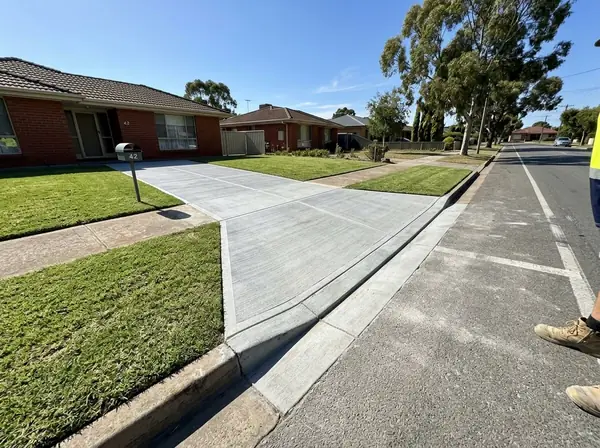
Old drive out Monday, new one poured Tuesday, sealed by Friday. Exactly what they said would happen.
They handled the council crossover permit and the inspection. We didn't chase a thing.
First winter with no puddle at the garage door. The fall is spot on.
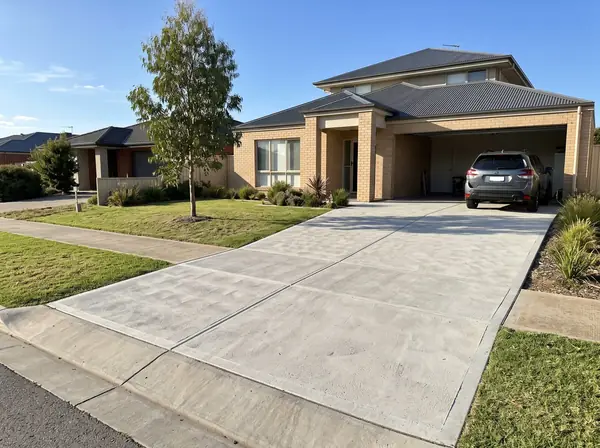
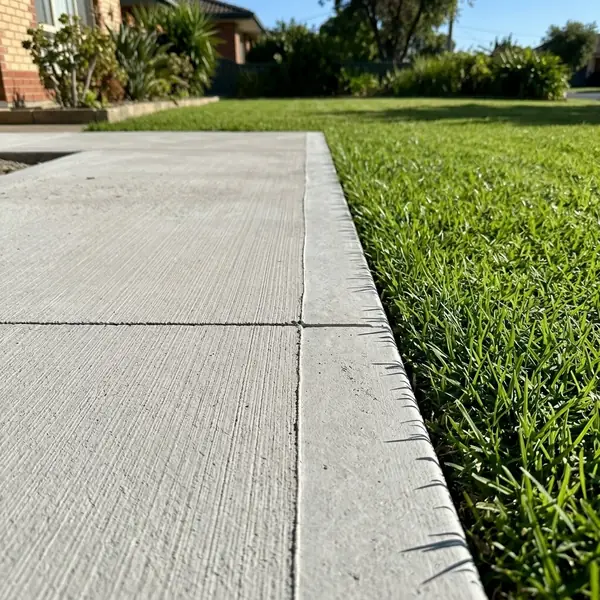
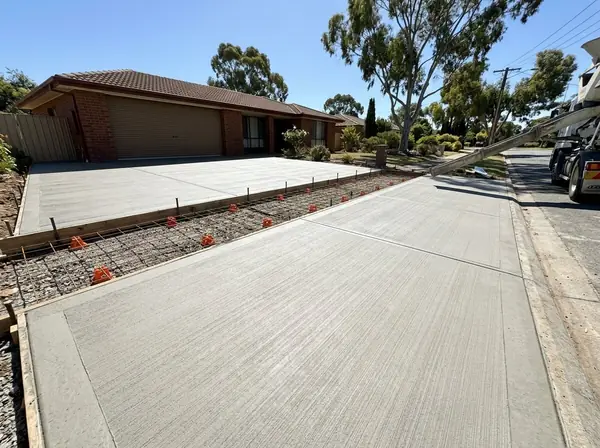
Broom-finished double driveway and crossover, Golden Grove. Inset: the edge up close.
Why concrete driveways
A driveway built for the car, the clay and the council
Anyone can pour a slab. A driveway that is still flat and uncracked in twenty years is about everything underneath it.
Done in a week
Old drive out on day one, new drive poured by day two, cut on day three and sealed by the end of the week. You get the dates in writing.
Built for Adelaide clay
Compacted rubble base, 100 to 125 mm of concrete, SL72 mesh on chairs and joints at tight centres, so seasonal movement never becomes a crack.
Crossover handled
The bit between your boundary and the road needs a council permit and their spec. We do the paperwork and the pour.
Any finish you like
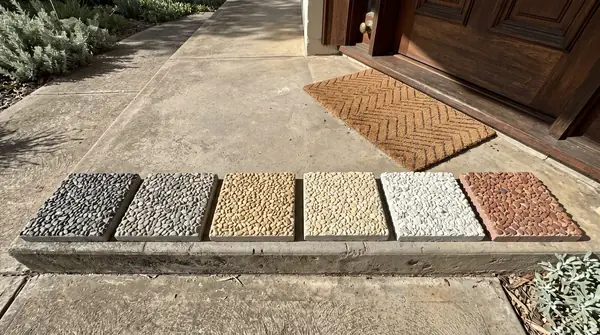
Plain, broomed, exposed aggregate, honed or coloured. We bring sealed samples so you choose from the real thing.
Recent jobs
Driveways we've poured across Adelaide
Singles, doubles, slopes and shared drives. Use the arrows to flick through, or tap the middle card to see it up close.
What you get
One quote. Everything included.
No allowances, no "subject to site conditions", no surprise invoice for the skip bin or the crossover permit. The quote covers the lot:
- A free on-site measure and quote, with a written scope and the dates.
- Sealed finish samples brought to you.
- Break-out and disposal of the old driveway, pavers or lawn.
- Excavation, a compacted rubble base, formwork set to the correct fall, SL72 mesh.
- Pour, finish, saw-cut control joints and sealing.
- Council crossover permit and inspection, site swept and hosed, workmanship guarantee.
Fully licensed and covered by public liability insurance. Certificates come through with your quote.
Book a free measure and quote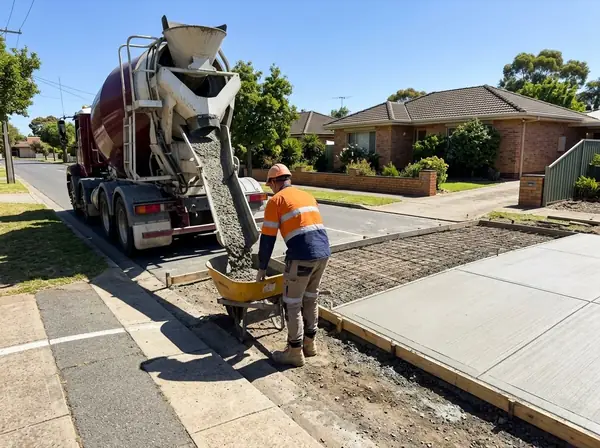
Verified Google review
“Council crossover and a new driveway, all handled for us. They dealt with the paperwork and the inspection so we didn't have to chase anything, the old drive was gone on the Monday and we were parking on the new one the following week.”
The job explained
What makes a concrete driveway last?
The part you can see is the last few millimetres. What decides whether a driveway is still flat and crack-free in twenty years is under it: a base of crushed rubble compacted in layers, a slab thick enough for what parks on it, steel mesh sitting in the middle of the concrete rather than on the ground, and control joints saw-cut at tight enough spacing that the slab moves where we decide.
Fall matters as much as strength. A driveway has to shed water toward the street or a drain, never toward the garage or the house, and it has to do that without puddling at the crossover. We set the formwork to the fall first and pour to it, and where the slope runs toward the house we build in a strip drain at the door.
When a new driveway isn't the answer
A driveway with one or two cracks and a sound base can sometimes be honed or overlaid rather than replaced, and we'll say so. A driveway that has lifted, hollowed underneath or cracked through can't be patched. Replacing it is the only fix that holds, and it's the one we'll quote.
At a glance
- Slab thickness
- 100 mm125 to 150 mm under trucks or caravans
- Reinforcement
- SL72 meshSL82 for heavy vehicles
- Concrete strength
- 25 to 32 MPa32 for decorative finishes
- Fall
- 1 in 60 to 1 in 100away from the house
- Joints
- Every 3 msaw-cut the day after the pour
- Walk on it
- 24 to 48 hrsafter the pour
- Park on it
- 7 daysheavy vehicles after 28
- Time on site
- 3 to 5 daysbreak-out to sealed
How we do it
Old drive to new drive in five working days
Every driveway follows the same sequence. The dates come with the quote, before anyone turns up.
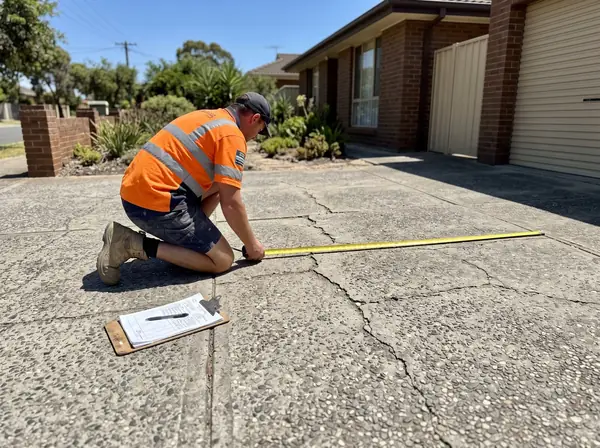
Measure and quote
We measure, check the fall and access for the truck, and confirm whether the crossover is involved. Written quote within a day or two.
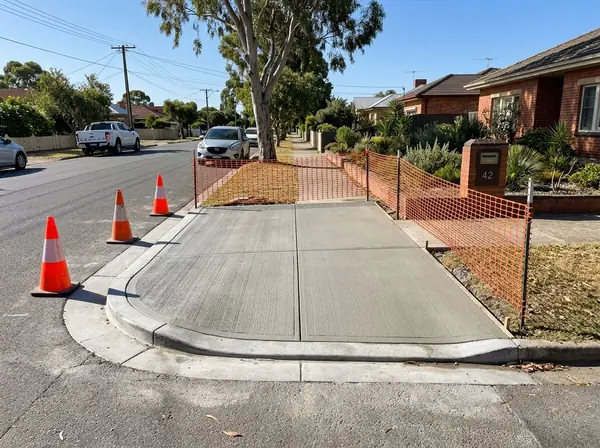
Council crossover permit
If the job touches the verge, we lodge the permit with your council, pour to their specification and book the inspection.
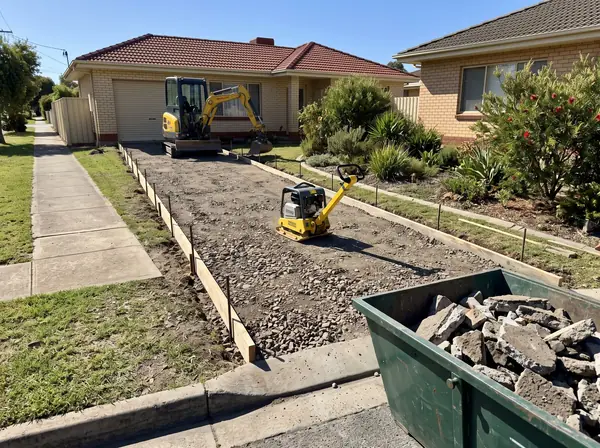
Break out and prep
Old concrete out and carted away, excavate to depth, compacted rubble base, and formwork set to the fall we planned.
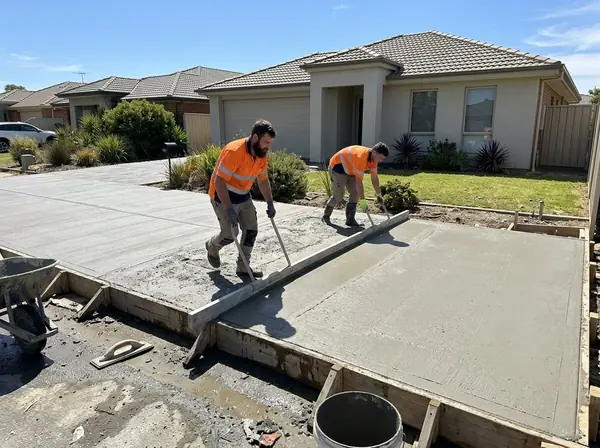
Reinforce and pour
SL72 mesh on chairs, then the pour: screeded, floated and finished plain, broomed or with the stone for exposed aggregate.
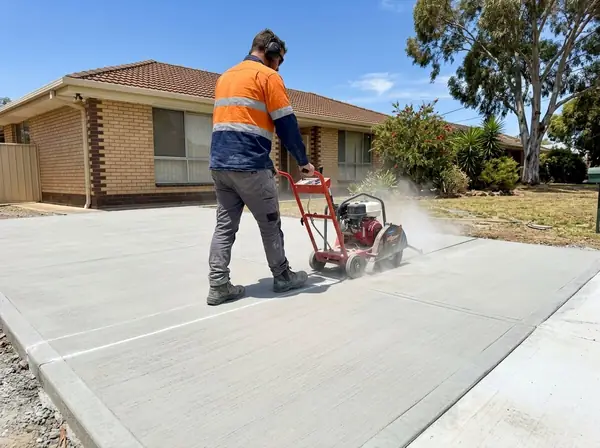
Cut and cure
Control joints saw-cut at tight centres the next morning, then the slab is left to cure. Walk on it now, park on it in a week.
Seal and hand over
Sealed once dry, site swept and hosed, and a walk-through with you. The crossover inspection is booked if the council requires one.
Finishes
Five finishes, one driveway
The base, mesh and joints are the same under every finish. What you choose changes the look, the grip and how it handles marks.
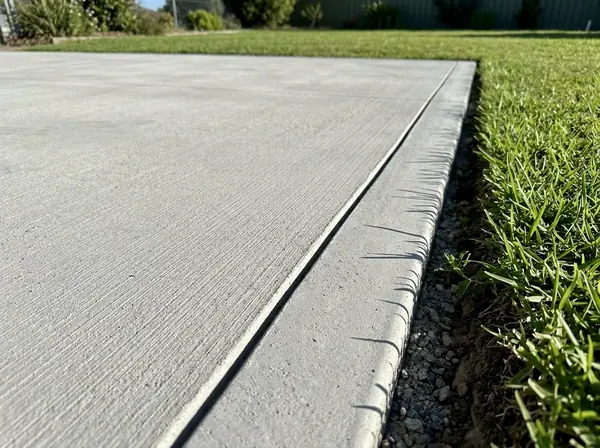
Plain grey
Steel-trowelled smooth. The most economical finish, best in a carport or where it's out of sight.
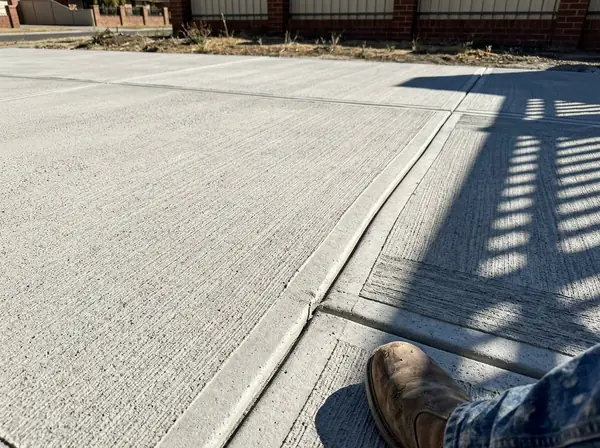
Broom finish
Fine brush lines dragged across the surface for grip. The standard driveway finish, tidy and safe on a slope.
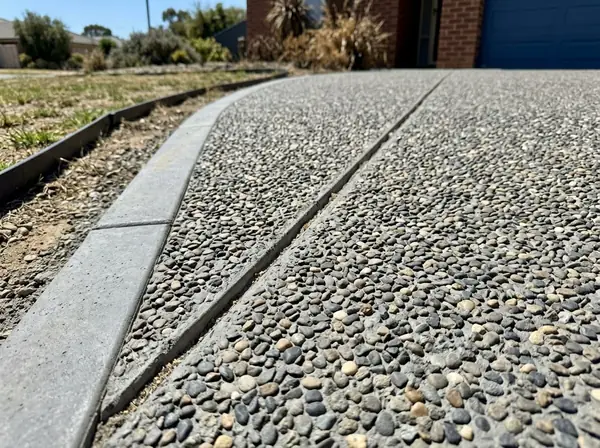
Exposed aggregate
Stone washed proud of the surface. Hides tyre marks, grips in the wet, and comes in dozens of blends.
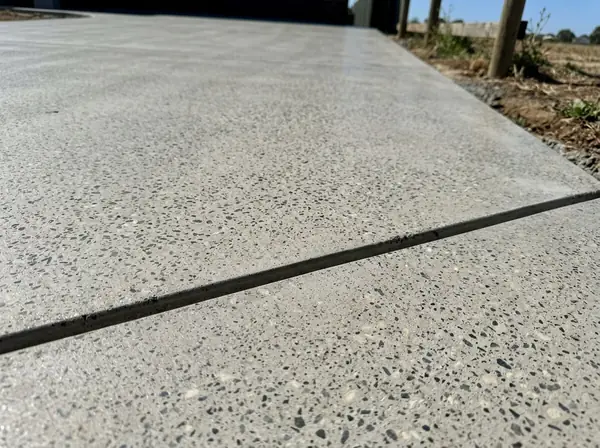
Honed
Ground back to a smooth, flat, low-sheen surface. The contemporary choice for a flat drive that matches the entry.
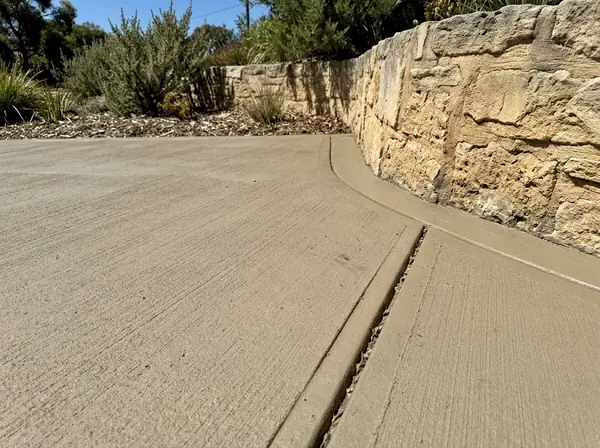
Coloured
Oxide colour through the mix, in sandstone, charcoal or terracotta tones, with a broom or trowel finish.
Exposed aggregate and honed each have a page of their own with the blends and grades in detail. Every finish comes to the quote as a sealed sample.
Where it works
Every kind of driveway we pour
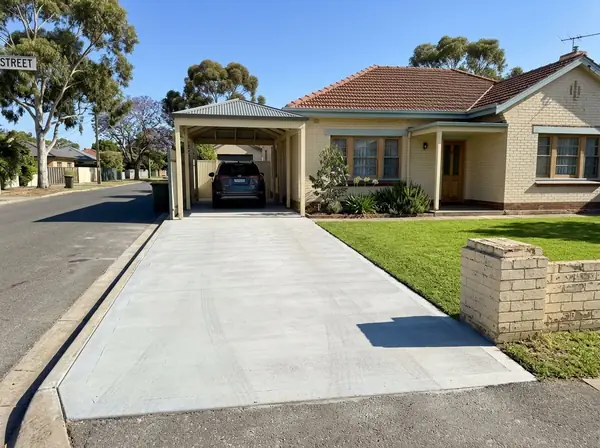
Single driveways
A car's width from the street to the carport, with a lawn or garden strip beside it.
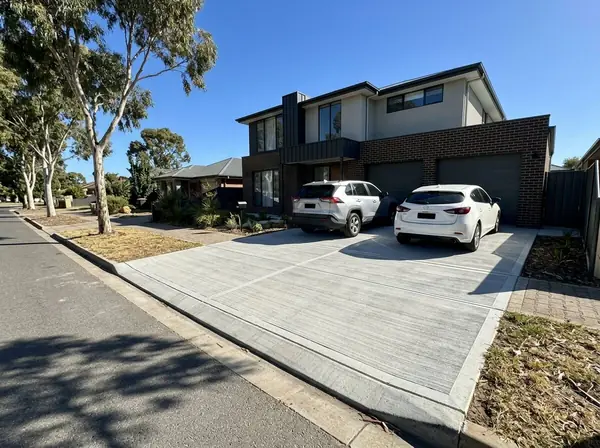
Double driveways
Two cars side by side, or a wide apron at a double garage.
Crossovers and verges
The council-owned section between the footpath and the road, poured to their spec.
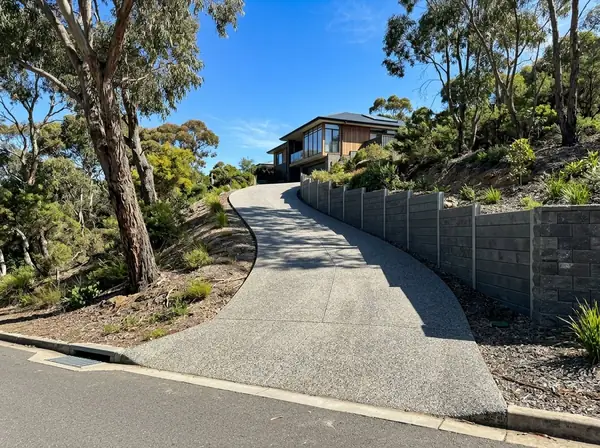
Sloping driveways
Hills blocks need grip, drainage and sometimes a retaining wall. Exposed aggregate is the finish here.
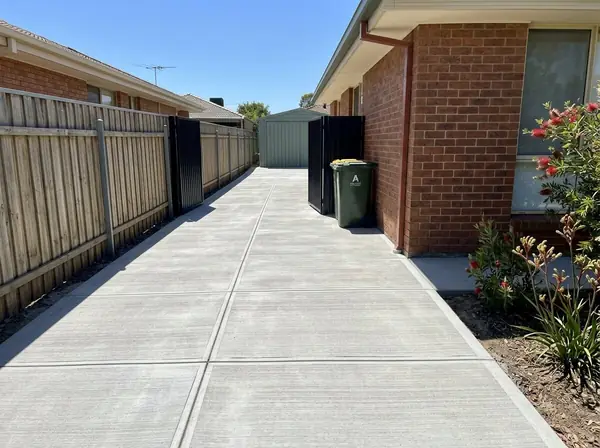
Side access and aprons
Room to get the trailer down the side, or a hardstand at the shed.
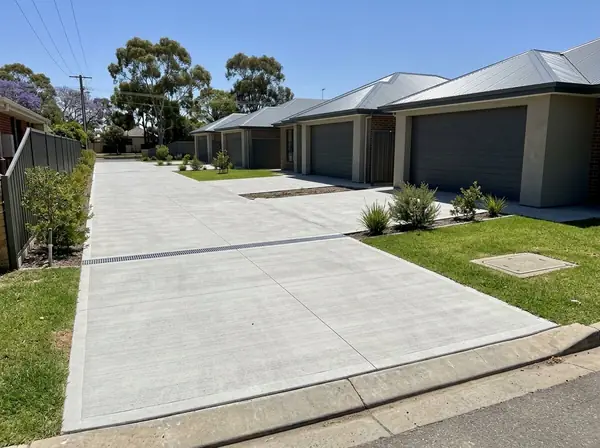
Unit and shared driveways
Body-corporate and developer jobs, with strip drains and turning room built in.
How it compares
Concrete vs pavers, asphalt and crushed rock
How the common driveway surfaces stack up over the years. For the long version, read Why Concrete Cracks on Adelaide's Clay Soils, and How We Prevent It.
| Feature | Concrete | Pavers | Asphalt | Crushed rock |
|---|---|---|---|---|
| Lifespan | 30 years or more | 15 to 25 years with re-levelling | 10 to 20 years | Ongoing top-ups |
| Movement | Controlled by saw-cut joints | Sink, rock and weed up | Softens in heat, ruts | Spreads and pots |
| Maintenance | Reseal every few years | Sand, weeds, re-levelling | Reseal, patch potholes | Rake and top up |
| Finishes | Plain, broom, exposed aggregate, honed, coloured | Many, but modular | Black | Grey or red |
| Grip when wet | Good to excellent by finish | Varies by paver | Good | Loose underfoot |
| Heavy vehicles | Yes, at 125 to 150 mm | Only on a concrete base | Yes | Ruts |
| Best for | Any driveway meant to last | Feature areas, patios | Long rural drives | Temporary or rural |
Built for Adelaide
Driveways built for Adelaide's clay, slopes and councils
Reactive clay through the eastern and northern suburbs moves with the seasons. A compacted rubble base, mesh set mid-slab and joints at tight centres are what keep a driveway flat through the wet winter and the dry summer.
Hills blocks from Blackwood to Stirling bring slope and stormwater into every drive. We set the fall to carry water to the street, build in strip drains where it runs toward the house, and pour a grippy finish on the steep bits.
Every council has its own crossover specification and inspection process, from Charles Sturt to Tea Tree Gully. We've poured to all of them, and we lodge the permit for you.
FAQ
Concrete Driveways questions, answered
How long does a new concrete driveway take?
Three to five working days on site. Day one is break-out and base, day two the pour, day three the saw cuts, then sealing once the slab has dried. You get the dates with the quote. Walk on it after 24 to 48 hours and park on it after seven days.
How thick should a concrete driveway be?
100 mm with SL72 mesh for cars and SUVs, which is what most Adelaide driveways get. If a caravan, boat or work truck will sit on it, we go to 125 mm with SL82 mesh, and hardstands for heavy vehicles go to 150 mm with engineered reinforcement.
Do I need council approval for a driveway?
Only for the crossover, the section between your boundary and the road. That is council land, so it needs a permit and has to be poured to the council's specification, and some councils inspect it. We prepare the paperwork, lodge it and book the inspection.
Will my new driveway crack?
All concrete moves, and Adelaide's clay makes sure of it. We control where it happens with the right thickness, mesh set mid-slab and saw-cut control joints at tight spacing, so movement shows up as a fine straight joint rather than a random crack.
Can you pour a new driveway over the old one?
No. An overlay is thin, it can't take a car, and it cracks wherever the old slab does. We break the old driveway out, re-prep the base and pour a proper slab. It is more work up front and lasts decades longer.
What finish should I choose?
Broom finish is the standard: tidy, grippy and economical. Exposed aggregate is the most popular for the front of the house because it hides tyre marks and comes in dozens of blends. Honed suits a modern flat site, and coloured concrete suits heritage homes. We bring samples of each.
How wide should a driveway be?
A single driveway is 3 to 3.5 metres wide, which gives room to open a door. A double is 5 to 6 metres. If the drive is long or the road is busy, a turning bay near the house saves reversing out, and we can build it into the same pour.
What about drainage?
A driveway must fall away from the house and the garage, ideally toward the street, without puddling at the crossover. Where the block falls toward the house we build a strip drain across the garage door and connect it to stormwater.
Can you pour in winter?
Yes. Adelaide winters are mild enough to pour year round. We watch the forecast for rain on pour day and heavy frost overnight, and we adjust the mix and the cure time to suit. Rain the day after a pour is no problem.
How long before I can park on it?
Walk on it after 24 to 48 hours, park a car on it after seven days, and keep trailers, caravans and skip bins off it for 28 days while the concrete reaches full strength.
Related reading
Before you decide
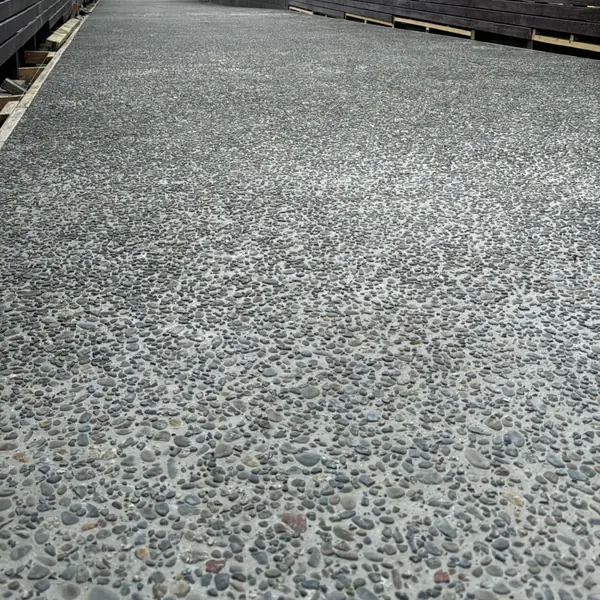
Exposed Aggregate vs Honed Concrete: Which Suits Your Adelaide Home?
Two finishes, two very different jobs. How they're made, how they handle heat and wet feet, and which one we'd pick for your driveway.
Read more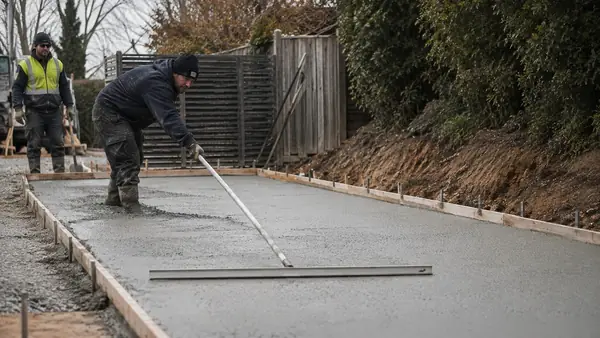
Why Concrete Cracks on Adelaide's Clay Soils, and How We Prevent It
Reactive clay moves with the seasons. Base prep, slab thickness, mesh and saw-cut control joints are what decide whether that movement shows.
Read moreOther finishes and services
Exposed Aggregate
Washed back to reveal the stone. Grippy and hides marks.
Honed Concrete
Ground and polished to a smooth, low-sheen finish.
Concrete Slabs
Shed, garage, granny flat and house slabs.
Paths & Walkways
Side paths, footpaths and entry walkways.
Pool Surrounds
Non-slip finishes for pools and alfresco areas.
Ready when you are
Ready to stop looking at that old driveway?
Tell us about the job and we'll come out, measure up and bring the samples. A written quote with the dates, usually within a couple of days. No pressure and no obligation.