
Concrete paths and walkways in Adelaide
Concrete paths and walkways in Adelaide with clean edges and no trip hazards
Side paths, front entries, garden walkways and steps, poured with the right fall, safe transitions and a finish that matches the house. Most paths are done in two days. Free on-site quote.
Replaced all our cracked paths and poured a patio. They worked around our dog and our fussy neighbour without a single complaint.
The side path finally drains the right way. No more lake at the back door after rain.
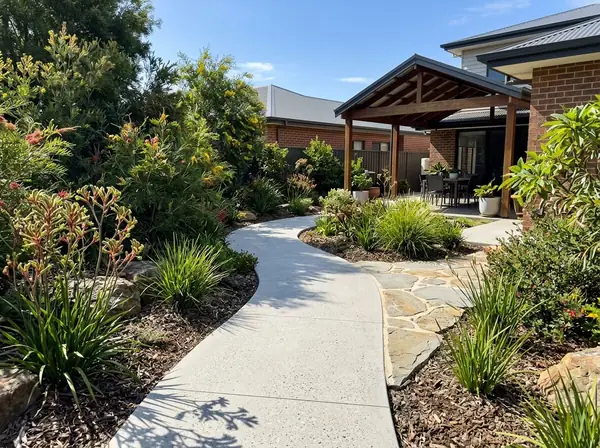
Curved the path around the garden bed instead of cutting corners. Looks like it was always there.
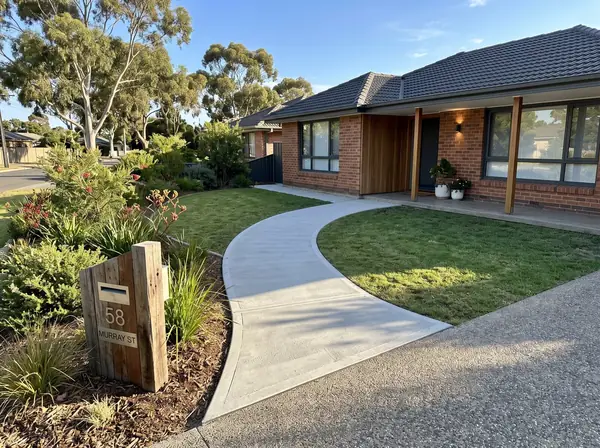
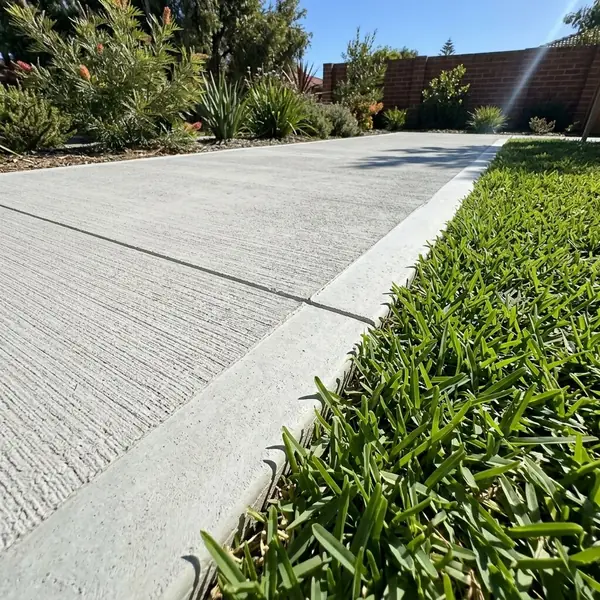
Front path and porch, Marion. Inset: the edge up close.
Why paths & walkways
The path you stop noticing, which is the point
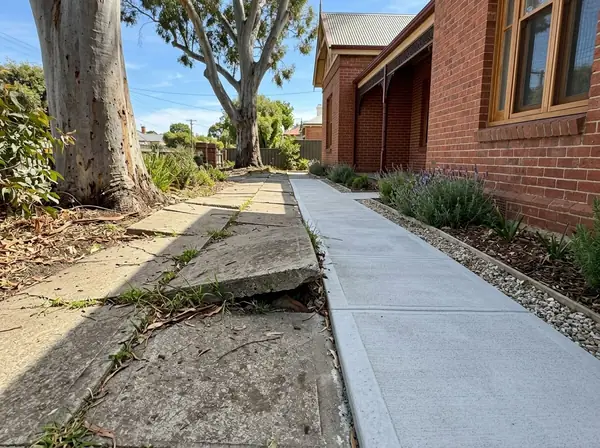
A good path is flat, dry and quiet underfoot. The old one you've been stepping over is none of those things.
No more trip hazards
One continuous slab with saw-cut joints, not pavers that lift and slabs that tilt. Steps formed where the ground changes, never a surprise lip.
Drains properly
Poured with a fall away from the house so water runs to the garden or a drain, not into a puddle at the back door.
Matches the driveway
Broom, exposed aggregate, honed or coloured, in the same finish as the drive and the alfresco, so the whole yard reads as one.
Done in days
Most paths are out, formed and poured in two days, and you're walking on them the day after.
Recent jobs
Paths and walkways we've poured across Adelaide
Side paths, entries, garden walkways and steps. Use the arrows to flick through, or tap the middle card to see it up close.
What you get
One quote. Everything included.
Paths are small jobs that go wrong in the details, so the details are in the quote:
- A free on-site measure and quote, with a written scope.
- Sealed finish samples brought to you, matched to the driveway or alfresco.
- Removal and disposal of the old path, pavers or lawn, and root cutting where a tree has lifted it.
- Excavation, a compacted base, formwork set to the fall, and mesh on chairs.
- Pour, finish, saw-cut joints, expansion joints against the house, and formed steps where needed.
- Sealing on decorative finishes, site swept and hosed, and a workmanship guarantee.
Fully licensed and covered by public liability insurance. Certificates come through with your quote.
Book a free measure and quote
Verified Google review
“Replaced all our cracked paths and poured a patio. They worked around our dog and our fussy neighbour without a single complaint, curved the path around the garden bed instead of cutting a corner, and the back door has been dry through two winters.”
The job explained
What a path needs to stay flat
A path fails the same three ways every time: it lifts where a tree root pushes under it, it cracks where the clay moves and there's no joint to take it, and it puddles because it was poured flat. The fixes are all in the preparation. A compacted base, mesh in the middle of a 75 to 100 mm slab, joints every two to three metres, and a fall of about one in a hundred away from the house.
Width is the other decision. Nine hundred millimetres is enough for one person and a wheelie bin down the side of the house. Twelve hundred lets two people pass, takes a wheelbarrow comfortably and looks right at a front entry. Where the ground changes level we form steps with a consistent riser and a landing at the door, never a single odd step halfway along.
When we'd suggest something else
Right up against a large gum tree, a path will lift again unless the root is cut and a barrier put in, and sometimes a gravel or stepping-stone walkway is the honest answer there. And a very steep run needs steps, not a ramp of concrete. We'll say so at the quote.
At a glance
- Width
- 900 to 1200 mmwider at entries and landings
- Thickness
- 75 to 100 mm100 mm where a mower or barrow runs
- Reinforcement
- SL62 or SL72 meshon chairs, mid-slab
- Fall
- 1 in 100away from the house
- Joints
- Every 2 to 3 mplus an expansion joint at the house
- Steps
- 150 to 170 mm riseconsistent along the run
- Walk on it
- 24 hrsafter the pour
- Time on site
- 1 to 3 daysout, formed and poured
How we do it
Old path out, new path in, in a couple of days
Short jobs with the same care as a driveway. The dates come with the quote.
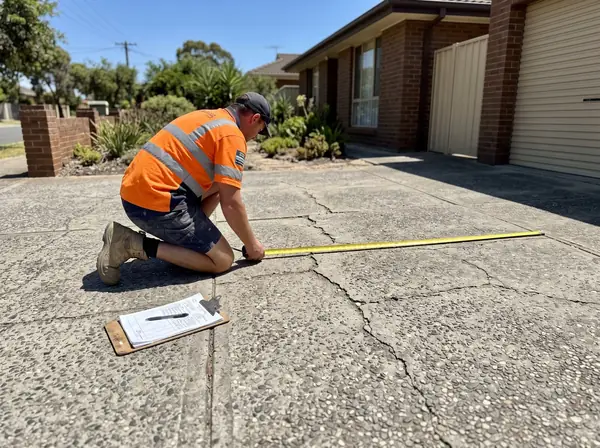
Measure and quote
We measure the run, check where the water goes now and where it should, and note any roots or steps. Written quote within a day or two.
Choose the finish
Sealed samples brought to you, matched to the driveway, the alfresco or the house, so the path doesn't look bolted on.
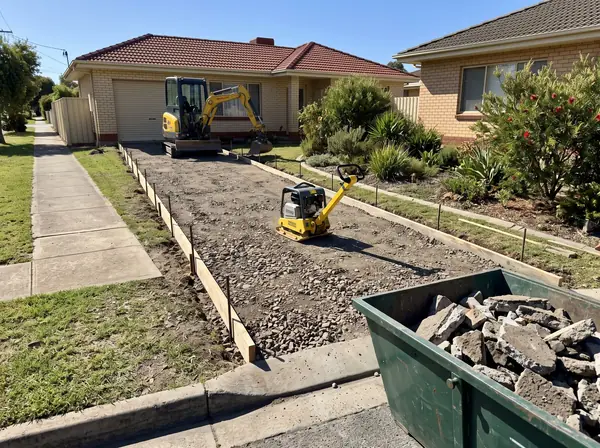
Out and prepped
Old path or pavers out, roots cut back, excavation, a compacted base and formwork set to the fall, curved where the garden curves.
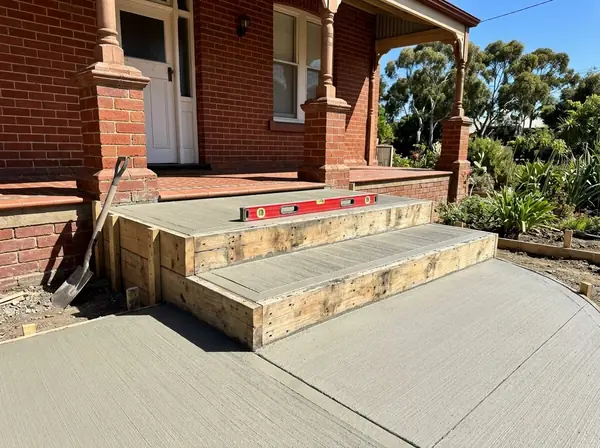
Form the steps
Where the ground changes level, steps are formed with an even rise and a landing at the door, and poured with the path as one piece.
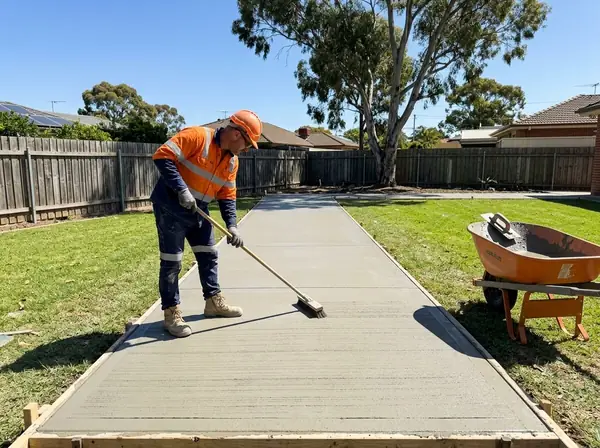
Pour and finish
Mesh on chairs, then the pour: screeded, floated and finished broomed, plain, or with the stone for exposed aggregate. Joints saw-cut the next morning.
Seal and hand over
Decorative finishes are sealed once dry. Site swept and hosed, and you're walking on it the day after the pour.
Finishes
A finish to match the rest of the yard
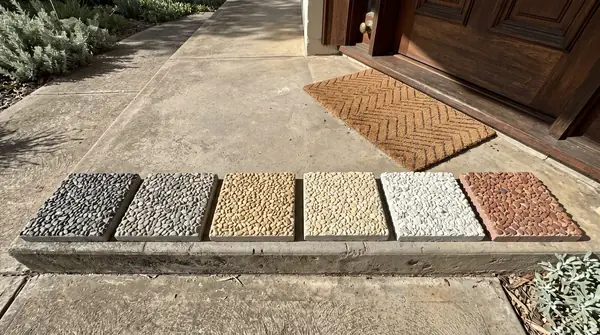
The base and the steel are the same under every finish. The finish is what you see, and it should match the driveway, the alfresco or the house.
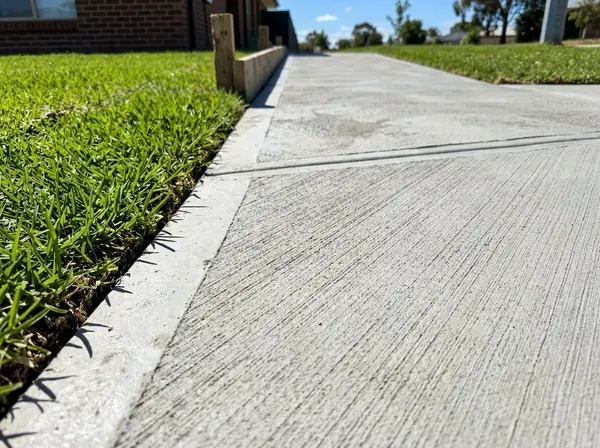
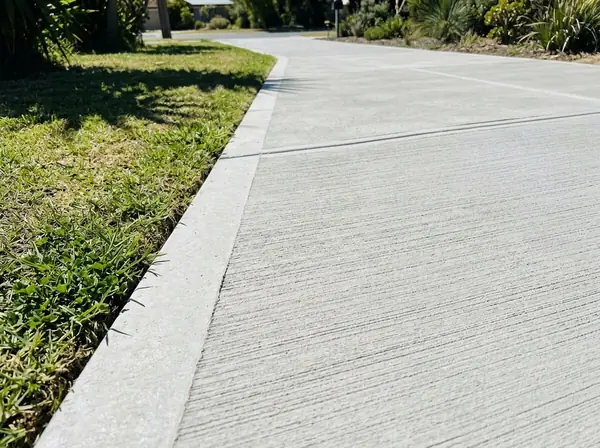
Broom finish
Fine brush lines for grip. The standard for a side path or a back-door path, tidy and economical.
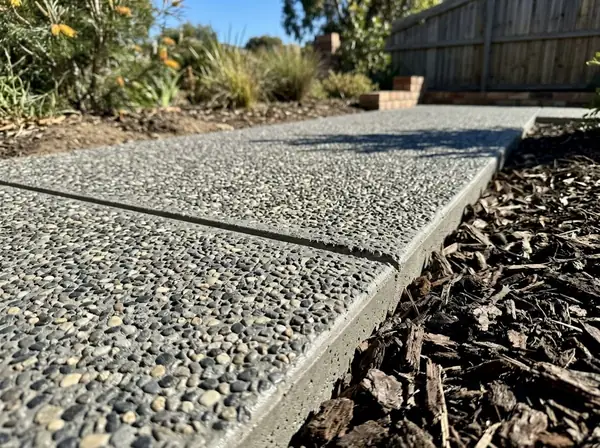
Exposed aggregate
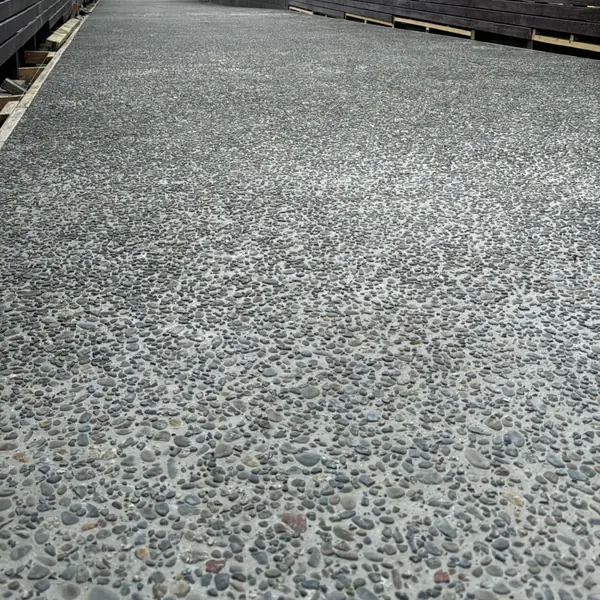
Stone washed proud of the surface in a fine 7 to 10 mm size. The pick for a front entry, and it hides leaf stains.
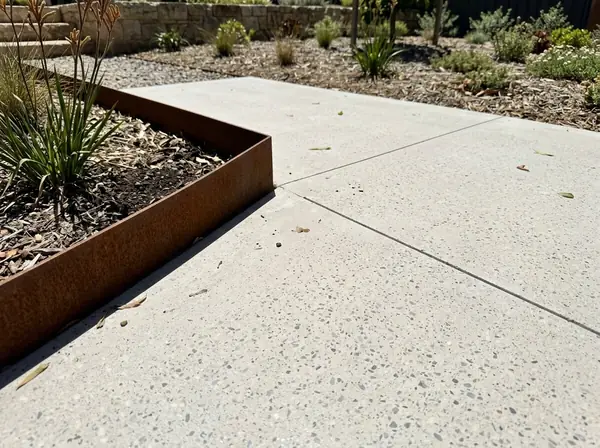
Honed
Ground back to a smooth, flat surface with a fine stone fleck. The contemporary choice for an entry that matches a honed porch.
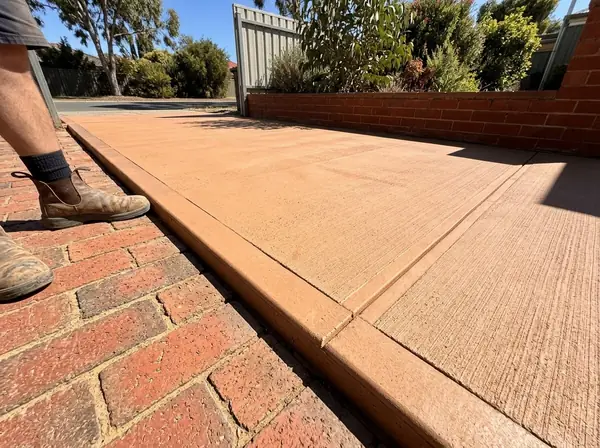
Coloured
Oxide colour through the mix in sandstone, terracotta or charcoal tones. Suits brick villas and heritage gardens.
Plain grey
Steel-trowelled smooth. For a utility path under a clothesline or behind a shed where it's out of sight.
Exposed aggregate and honed each have a page of their own with the blends and grades in detail. Every finish comes to the quote as a sealed sample.
Where it works
Every path we pour
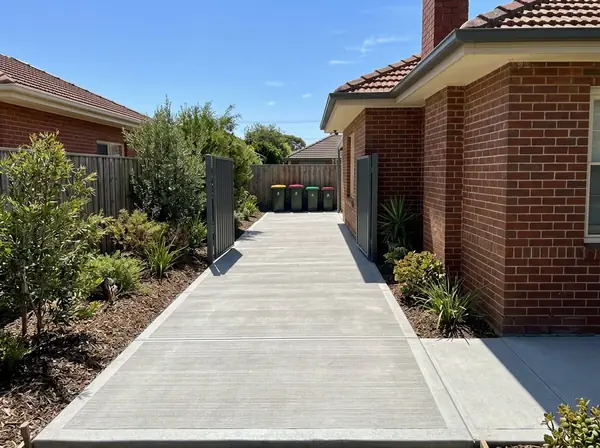
Side access paths
Bin day made easy: one clean run from the front to the back.
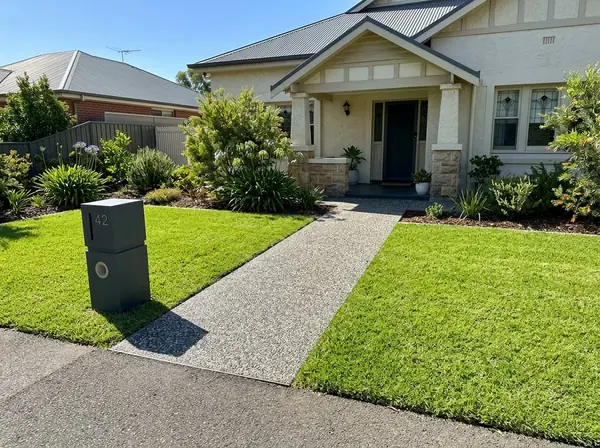
Front entry paths
The first thing a visitor walks on. Wider, and in the driveway's finish.
Garden walkways
Curved runs through the garden to a studio, a shed or the alfresco.
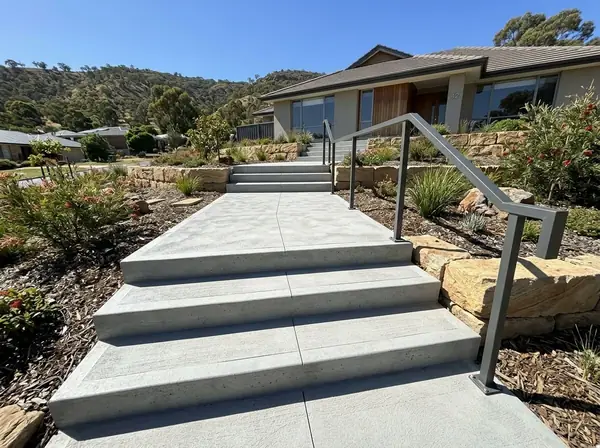
Steps and landings
Formed with the path, even risers, and a rail where it's needed.
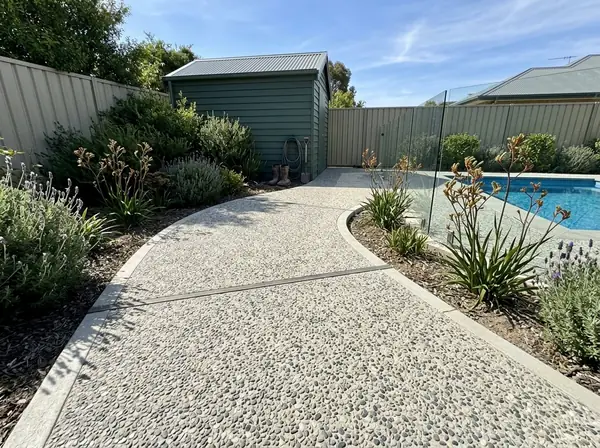
Paths around pools and sheds
Non-slip, drained, and matched to the pool surround.
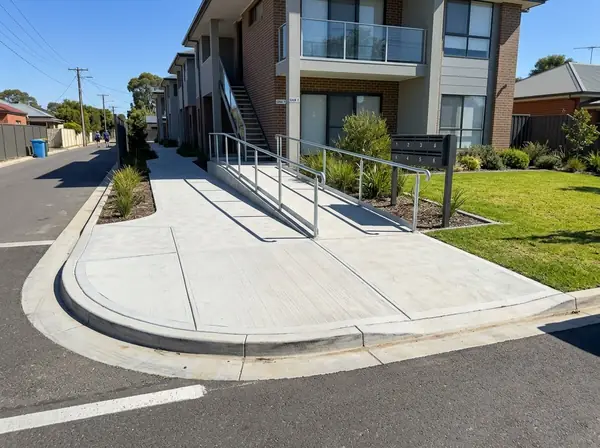
Unit and strata footpaths
Body-corporate paths and ramps with the grades and rails compliance asks for.
How it compares
Concrete vs pavers, gravel and decking for a path
How the usual path surfaces stack up over the years. For the long version, read Why Concrete Cracks on Adelaide's Clay Soils, and How We Prevent It.
| Feature | Concrete | Pavers | Gravel | Timber decking |
|---|---|---|---|---|
| Trip hazards | None, one slab with saw-cut joints | Pavers lift and rock | Loose, scatters onto lawn | Boards cup and nails lift |
| Drainage | Poured to a fall | Depends on the bedding | Drains through | Drains through the gaps |
| Weeds | None | Grow in every joint | Constant | Under the boards |
| Maintenance | Hose, reseal decorative finishes | Sand, re-level, weed | Rake and top up | Oil every year or two |
| Wheelie bins and barrows | Easy | Bumpy | Hard going | Fine |
| Finishes | Broom, exposed aggregate, honed, coloured | Many, modular | Grey or gold | Timber |
| Best for | Any path meant to last | Feature paths, patios | Rural and informal | Raised walkways |
Built for Adelaide
Paths built for Adelaide's clay, gum trees and sand
The reactive clay under most Adelaide suburbs lifts and drops a path with the seasons. Mesh in the middle of the slab and joints every two to three metres let it move without cracking, and an expansion joint at the house keeps it from pushing on the footings.
Gum trees lift paths. Where a root is the reason the old path failed, we cut it back, put in a root barrier and pour over a thicker base, and we'll tell you when the tree will win regardless.
Coastal sand from Semaphore to Seaford needs a different base and compaction to stay put, and a sealed finish there stands up to salt air far better than bare concrete.
FAQ
Paths & Walkways questions, answered
How wide should a concrete path be?
Nine hundred millimetres is the practical minimum for a side path, enough for a person and a wheelie bin. A front entry or a garden walkway looks and works better at 1000 to 1200 mm, which lets two people pass and takes a wheelbarrow. Landings at doors are wider again.
How thick is a concrete path?
Seventy-five millimetres is enough for foot traffic on a good base. We pour 100 mm where a mower, a barrow or a motorbike will run on it, and where the clay is reactive, with SL62 or SL72 mesh in the middle of the slab either way.
How long does a path take?
Most paths are out, formed and poured in two days, with the saw cuts the next morning. You can walk on it 24 hours after the pour. Longer runs, steps and decorative finishes add a day.
Why did my old path crack and lift?
Usually one of three things: a tree root pushing under it, reactive clay moving with the seasons and no joints to take the movement, or no base under it at all. A new path fixes all three with a compacted base, mesh, joints every few metres and, where a tree is involved, a root barrier.
Can you match the path to my driveway?
Yes. We pour the same finishes on paths as on driveways: broom, exposed aggregate, honed and coloured. If the driveway is exposed aggregate we'll match the blend, and if it's an older driveway we'll bring samples to find the closest.
Do I need steps or a ramp?
Where the ground changes by more than a step's height, steps with an even rise and a landing at the door are safest. If someone at home uses a walker, a pram or a wheelchair, a ramp at a gentle grade with a broom finish is the better choice. We'll measure the fall and recommend one.
Will the path be slippery?
A broom finish or exposed aggregate has good grip wet or dry. Honed and plain trowelled finishes are smoother, so on a ramp, steps or a path that stays shaded and damp we add a non-slip additive to the sealer.
Do you take away the old path?
Yes. Breaking out the old concrete or pavers, cutting back roots and carting it all away is part of the quote, along with sweeping and hosing the site before we leave.
Can you pour a path in winter?
Yes. Adelaide winters are mild enough to pour year round. We avoid pouring in rain and give a cold slab a little longer before the saw cuts, and that's all that changes.
Do I need council approval for a path?
Not for a path inside your boundary. If the path connects to the council footpath or crosses the verge, that section is council land and may need a permit and their specification, which we handle for you.
Related reading
Before you decide
Exposed Aggregate vs Honed Concrete: Which Suits Your Adelaide Home?
Two finishes, two very different jobs. How they're made, how they handle heat and wet feet, and which one we'd pick for your driveway.
Read more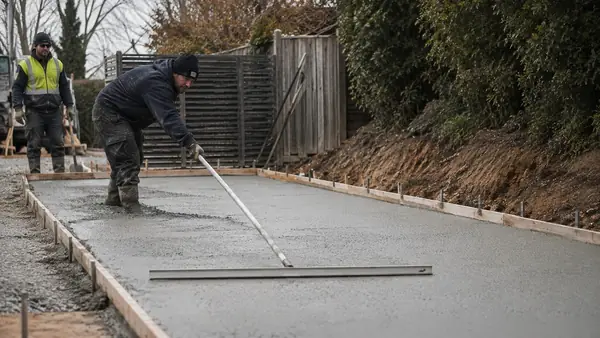
Why Concrete Cracks on Adelaide's Clay Soils, and How We Prevent It
Reactive clay moves with the seasons. Base prep, slab thickness, mesh and saw-cut control joints are what decide whether that movement shows.
Read moreOther finishes and services
Exposed Aggregate
Washed back to reveal the stone. Grippy and hides marks.
Honed Concrete
Ground and polished to a smooth, low-sheen finish.
Concrete Driveways
Old drive out, new drive poured, cut and sealed.
Concrete Slabs
Shed, garage, granny flat and house slabs.
Pool Surrounds
Non-slip finishes for pools and alfresco areas.
Ready when you are
Ready to stop stepping over the old path?
Tell us about the job and we'll come out, measure up and bring the samples. A written quote with dates, usually within a couple of days. No pressure and no obligation.