
Concrete pool surrounds in Adelaide
Concrete pool surrounds in Adelaide: non-slip, cool underfoot and built to drain
Exposed aggregate, honed or coloured concrete around your pool, with the fall, the drainage, the coping joint and the slip rating done properly. Pale blends that stay cool in an Adelaide summer. Free on-site quote.
Pale aggregate around the pool and you can walk on it barefoot at lunchtime in January. Kids haven't slipped once.
Coordinated with the pool builder and the fencer so we never had a gap. Drains away from the pool like they said.
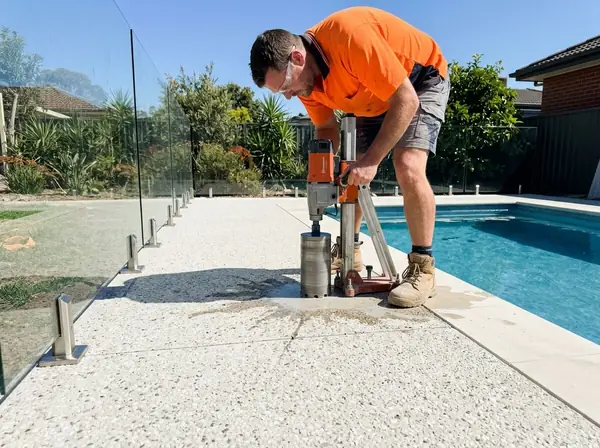
Cored the fence holes for us so the fencer didn't have to touch the new deck. Small thing, made a big difference.
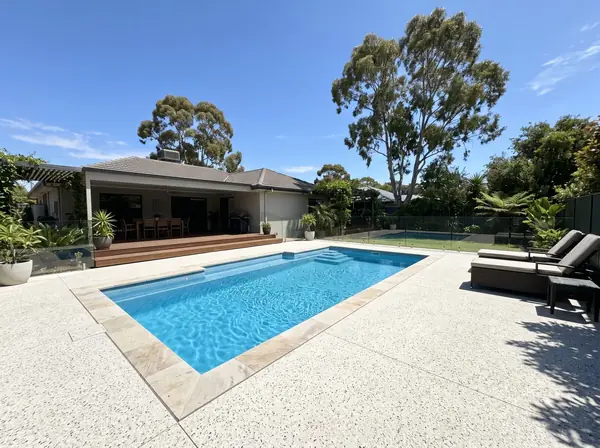
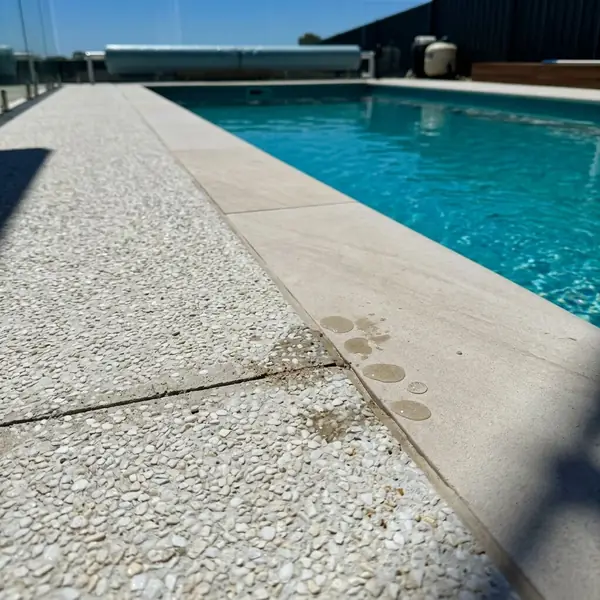
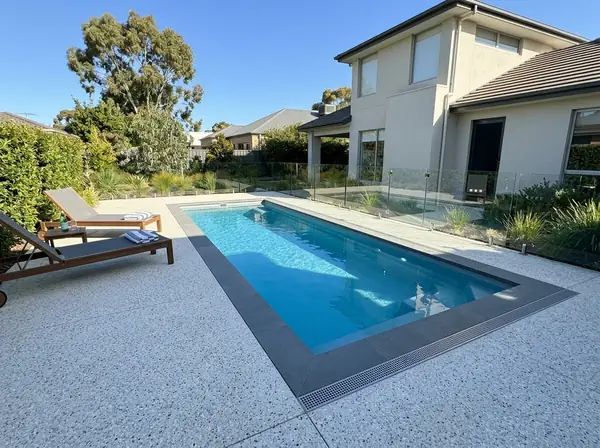
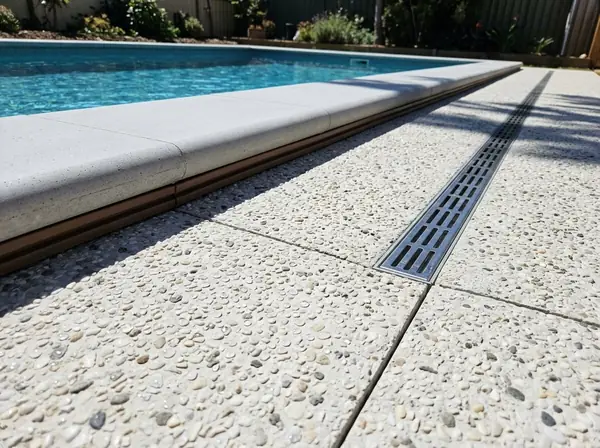
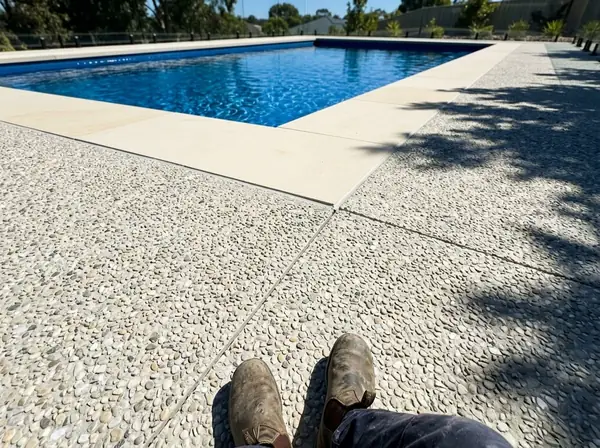
Coastal white exposed aggregate surround, Burnside. Inset: at the coping.
Why pool surrounds
Safe wet, cool in February, dry by lunchtime
A pool surround has one job most concrete doesn't: it has to be safe with wet feet running across it. Everything else follows from that.
Non-slip where it matters
Exposed aggregate or a non-slip sealer, finished to the slip rating recommended for pool surrounds. Grip when wet, without feeling rough.
Cooler underfoot
Pale bases with white quartz or cream pebble reflect the heat. Bare feet in an Adelaide summer notice the difference.
Drains away from the pool
A fall away from the coping to a strip drain or the garden, so splash and rain don't run back in and the deck dries fast.
Matches the alfresco
One finish from the back door across the alfresco to the pool edge, and a proper expansion joint at the coping so nothing cracks.
Recent jobs
Pool surrounds we've poured across Adelaide
New pools, replaced surrounds and alfrescos that run to the water. Use the arrows to flick through, or tap the middle card to see it up close.
What you get
One quote. Everything included.
Pool surrounds involve the pool builder, the fencer and the certifier, so the quote spells out exactly what we do and when:
- A free on-site measure and quote, timed with the pool builder and the fencer.
- Sealed samples of the pale, non-slip finishes that suit a pool, brought to you.
- Excavation and levelling, a compacted base, formwork set to fall away from the water.
- Mesh on chairs, an expansion joint at the coping, strip drains and any core holes for fence spigots.
- Pour, finish and a salt- and chlorine-resistant sealer with a non-slip additive.
- Site swept and hosed, and a workmanship guarantee.
Fully licensed and covered by public liability insurance. Certificates come through with your quote.
Book a free measure and quote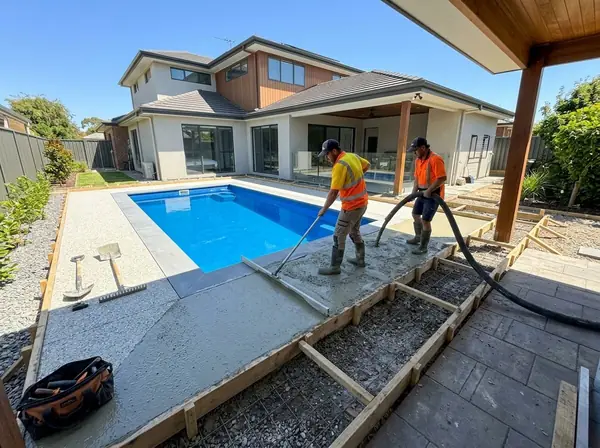
Verified Google review
“Pale aggregate around the pool and you can walk on it barefoot at lunchtime in January. They timed it between the pool builder and the fencer so we never had a gap, it drains away from the water like they said, and the kids haven't slipped once.”
The job explained
What a pool surround has to get right
Four things separate a pool surround from an ordinary slab. It falls away from the coping, about one in a hundred, so splash and rain drain to a strip drain or the garden instead of back into the pool. It has a flexible expansion joint where it meets the coping, because the pool shell and the slab move differently and a rigid joint cracks. It's finished to a slip rating that's safe with wet feet. And it's sealed with a product that shrugs off salt and chlorine.
Then there's the heat. A dark surround in an Adelaide January is painful to walk on. Pale exposed aggregate with white quartz or cream pebble, or a honed slab on a cream base, reflects enough sun to stay bearable barefoot, and both are non-slip by nature or by sealer. That combination is why almost every pool surround we pour is a pale one.
Timing it with the pool
We pour after the pool shell is in and backfilled, and before the fence goes up, and we core the holes for the fence spigots so the fencer isn't drilling your new deck. Tell us who the pool builder is and we'll fit around their program.
At a glance
- Slab thickness
- 100 mmSL72 mesh on chairs
- Fall
- 1 in 100away from the coping
- Coping joint
- Flexible expansion jointthe shell and the slab move apart
- Slip rating
- P4the rating recommended for pool surrounds
- Sealer
- Salt and chlorine resistantwith a non-slip additive
- Walk on it
- 24 to 48 hrsafter the pour
- Fence spigots
- After 7 dayscore-drilled by us, set by the fencer
- Reseal
- 2 to 3 yearssalt water is harder on sealer
How we do it
Poured after the pool, before the fence
The surround is the step between the pool builder and the fencer, and the timing matters as much as the pour.
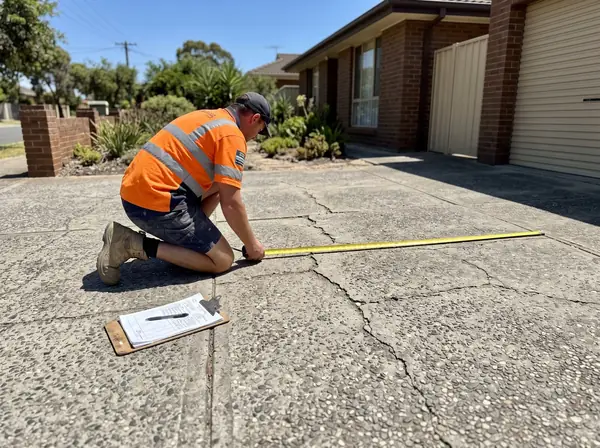
Measure and quote
We measure around the pool, agree where the water should go and where the fence lands, and send a written quote timed to the pool builder's program.
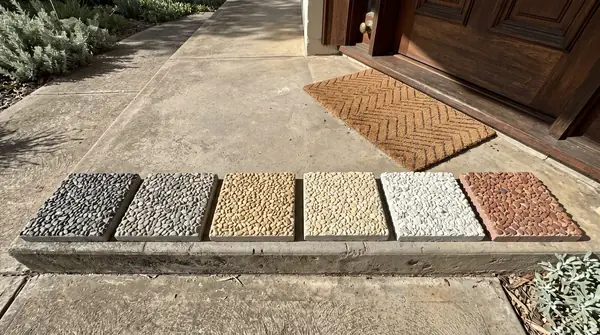
Choose the finish
Sealed samples of the pale finishes that stay cool and grip when wet, so you can stand on them barefoot before choosing.
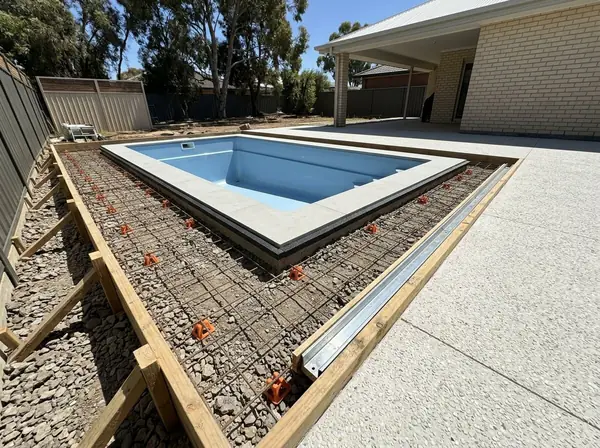
Prep and drainage
Level and compact the backfill, base, formwork set to fall away from the pool, strip drains set, and a flexible joint fixed to the coping.
Reinforce and pour
Mesh on chairs, then the pour: screeded to the falls, floated, and finished for exposed aggregate or honing.
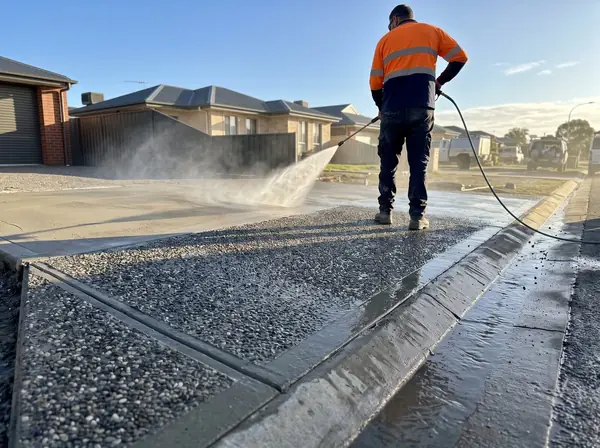
Wash off or hone
Exposed aggregate is washed the next morning and the joints cut. A honed surround is ground a week later.
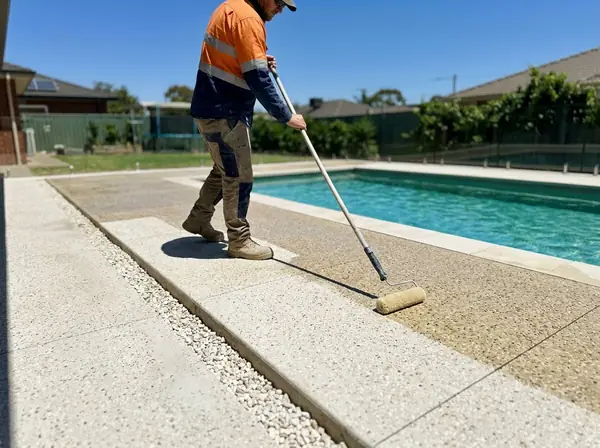
Seal, core and hand over
A salt-resistant sealer with a non-slip additive, core holes for the fence spigots, and the site cleaned for the fencer.
Finishes
Pale, cool and grippy: the finishes that suit a pool
Every finish here is chosen for bare, wet feet in the sun. Dark finishes are possible but we'll talk you out of them.
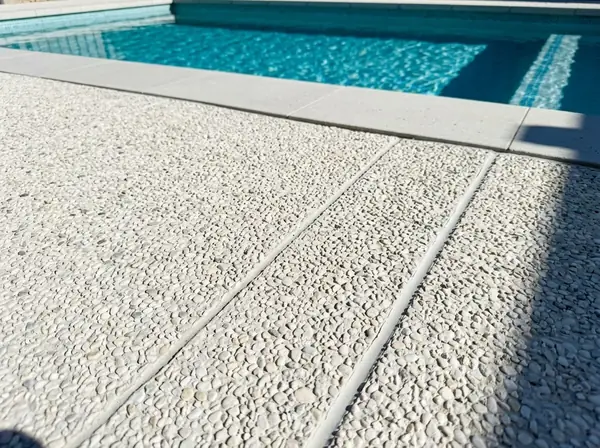
Coastal white exposed aggregate
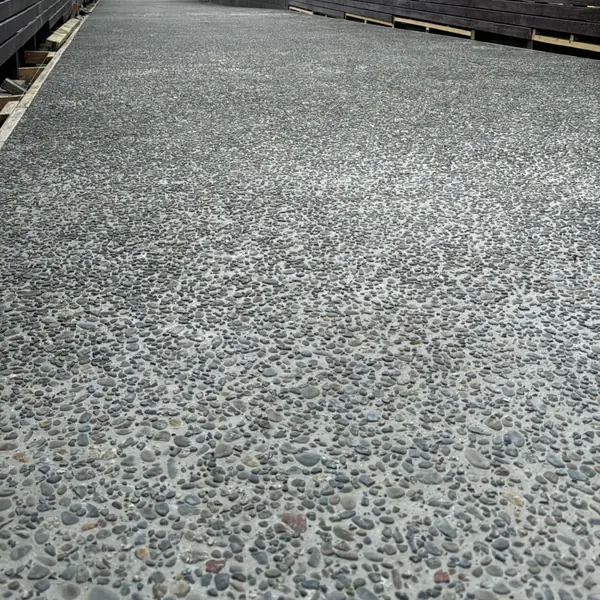
White quartz pebble in a pale base. The coolest surround we pour, non-slip by nature, and it suits every pool.
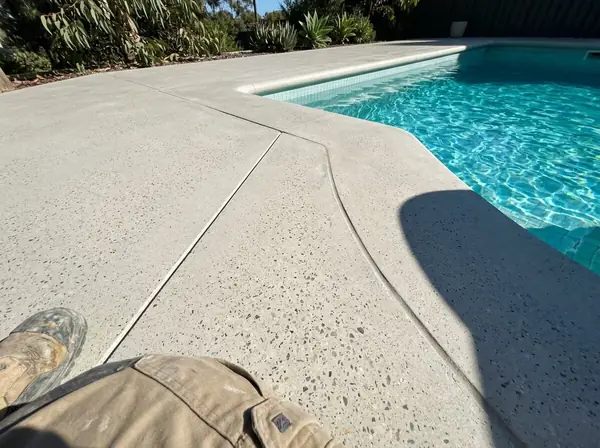
Oatmeal exposed aggregate
Cream and grey pebble in a warm beige base. Hides leaf stains and sunscreen marks, and stays cool.
Honed, cream base
Ground smooth and sealed with a non-slip additive. The seamless look that runs from the alfresco to the water.
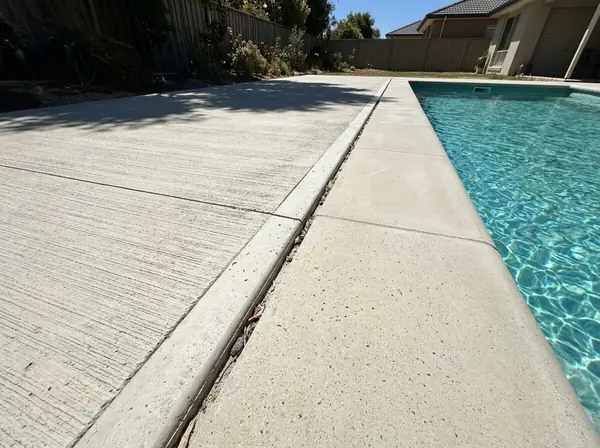
Coloured, sand tone
Oxide colour in a light sand tone with a fine broom finish. Economical, cool and grippy.
Exposed aggregate and honed each have a page of their own with the blends and grades in detail. Every finish comes to the quote as a sealed sample.
Where it works
Everything we pour around a pool
Pool surrounds
The deck itself, from the coping to the fence, drained and non-slip.
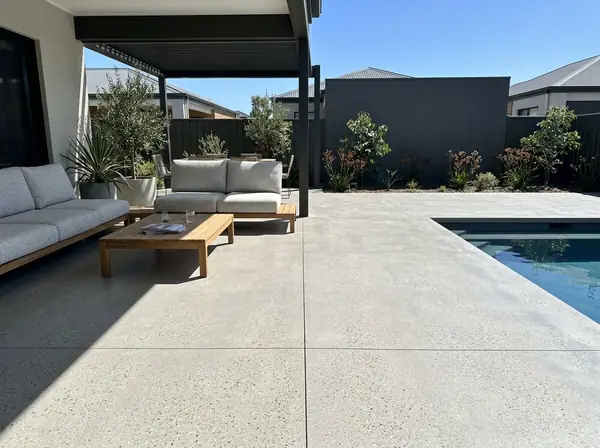
Alfrescos and pool decks
One finish from the back door to the water.
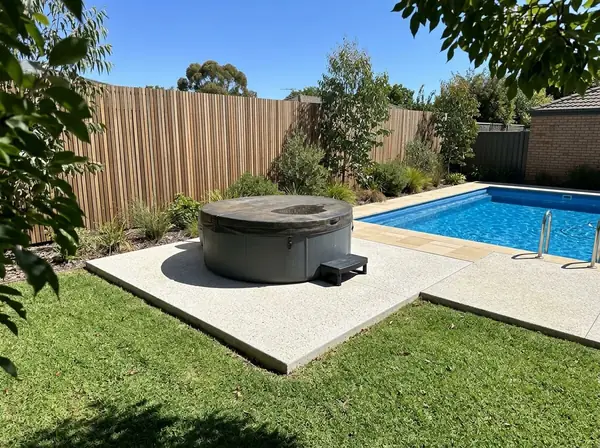
Spa pads
A level, reinforced pad for a spa, with the power and drainage where the installer needs it.
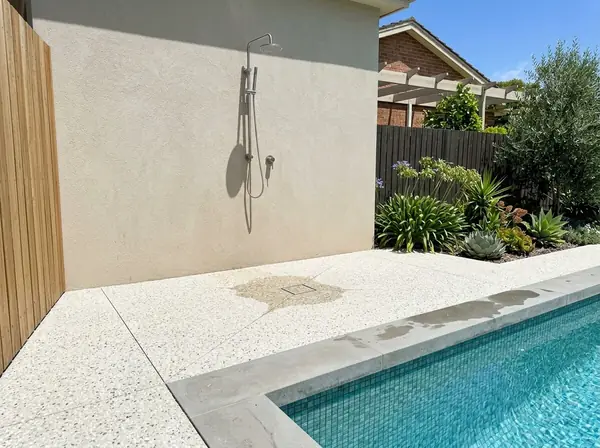
Outdoor showers
A base that falls to a grate, in the same finish as the surround.
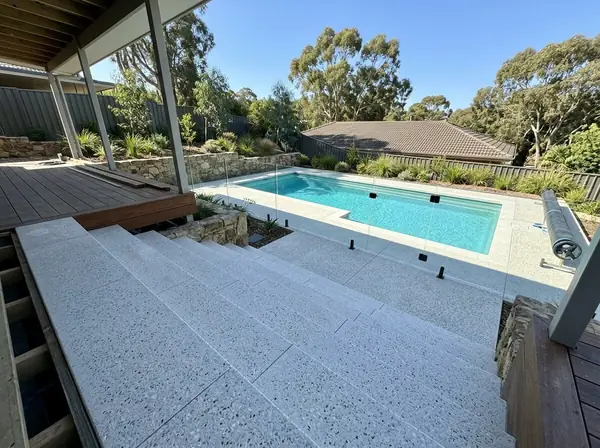
Steps to the pool
Broad, even steps between an alfresco and a lower pool level.
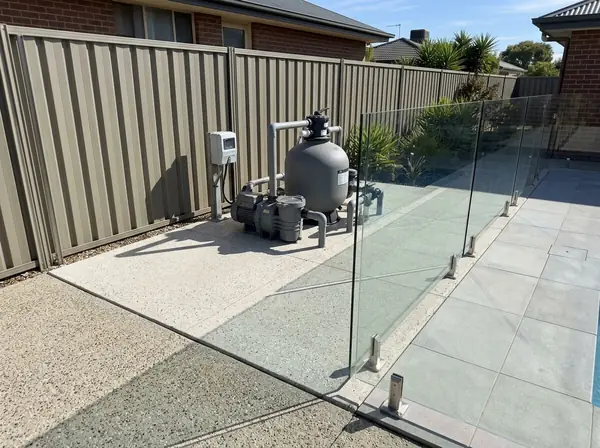
Pump and equipment pads
A dry, level pad for the pump, filter and heater, out of the mud.
How it compares
Concrete vs pavers, travertine and decking around a pool
How the usual pool surround surfaces stack up with wet feet and salt water. For the long version, read Exposed Aggregate vs Honed Concrete: Which Suits Your Adelaide Home?.
| Feature | Concrete | Concrete pavers | Travertine | Composite decking |
|---|---|---|---|---|
| Grip when wet | Excellent as exposed aggregate, good with a non-slip sealer | Varies by paver | Good when tumbled | Good, textured |
| Heat underfoot | Cool in pale blends | Cool in pale colours | Cool | Hot in dark colours |
| Salt and chlorine | Sealed, resistant | Sealed, resistant | Etches, needs sealing | Unaffected |
| Movement | One slab, jointed at the coping | Pavers sink and rock at the coping | Pavers sink and rock | Boards flex |
| Weeds and ants | None | In every joint | In every joint | Under the boards |
| Maintenance | Reseal every 2 to 3 years | Sand, weeds, re-levelling | Seal yearly | Hose |
| Best for | Any pool meant to last | Feature areas | Mediterranean-style pools | Raised pool decks |
Built for Adelaide
Pool surrounds built for Adelaide's sun, salt and clay
Adelaide summers make a dark pool deck unusable at midday. We steer every surround to a pale blend and show you the difference by standing on the samples in the sun.
Salt-water pools and coastal air from Semaphore to Seaford are hard on sealer and on bare concrete. A salt- and chlorine-resistant sealer, reapplied every two to three years, keeps the surface and the colour.
The reactive clay under the eastern and northern suburbs moves the ground around a pool shell. A compacted base, mesh, joints and a flexible joint at the coping let the surround and the pool move apart without cracking.
FAQ
Pool Surrounds questions, answered
What is the best concrete finish around a pool?
Pale exposed aggregate. White quartz or cream pebble stays cool in the sun, the stone gives grip with wet feet, and it hides leaf stains and sunscreen. Honed concrete on a cream base with a non-slip sealer is the seamless alternative for a modern pool.
Is concrete slippery around a pool?
Not when it's finished for a pool. Exposed aggregate grips by nature, and honed or coloured finishes get a sealer with a non-slip additive. We finish surrounds to the P4 slip rating recommended for pool surrounds, and a smooth, glossy sealer is the one thing we never put near water.
Does a concrete pool surround get hot?
Dark ones do. Pale blends with white or cream stone reflect most of the sun and stay bearable barefoot through an Adelaide summer, which is why nearly every surround we pour is a pale one. Stand on the samples in the sun before you choose.
When should the surround be poured?
After the pool shell is in and the backfill has settled, and before the fence goes up. We pour with a fall away from the coping, then core the holes for the fence spigots so the fencer can set them without drilling your new deck.
How does the surround drain?
It falls away from the pool at about one in a hundred to a strip drain along the alfresco edge or to the garden, and the drain is plumbed to stormwater. Splash and rain never run back into the pool, and the deck dries quickly.
Will it crack at the coping?
Not with a flexible expansion joint between the coping and the slab. The pool shell and the surround move differently with the ground and the water, and a rigid joint cracks within a season. The joint is part of every surround we pour.
Does salt water damage concrete?
Over years, salt and chlorine attack bare concrete and its sealer. We use a sealer rated for pool surrounds and recommend resealing every two to three years, sooner for a salt-water pool in full sun.
Can you pour a surround for an existing pool?
Yes. Replacing a cracked, lifted or tired surround around an existing pool is common. We break out the old surface, sort the drainage and the coping joint that were usually missing, and pour a new one, working around the fence or replacing it with the fencer.
How long does a pool surround take?
Two to three days on site for the base, formwork and pour, the wash-off the next morning for exposed aggregate, then sealing once it has dried. Honed surrounds add a week of curing before the grind. Walk on it after 24 to 48 hours.
Do you core the holes for the pool fence?
Yes. Give us the fencer's set-out and we core the spigot holes after seven days, so the fence goes up on a finished deck without anyone drilling into fresh concrete.
Related reading
Before you decide
Exposed Aggregate vs Honed Concrete: Which Suits Your Adelaide Home?
Two finishes, two very different jobs. How they're made, how they handle heat and wet feet, and which one we'd pick for your driveway.
Read more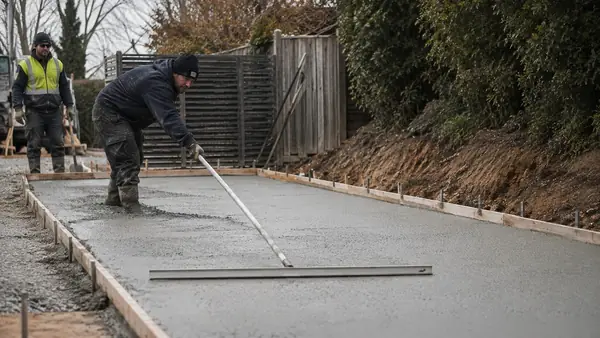
Why Concrete Cracks on Adelaide's Clay Soils, and How We Prevent It
Reactive clay moves with the seasons. Base prep, slab thickness, mesh and saw-cut control joints are what decide whether that movement shows.
Read moreOther finishes and services
Exposed Aggregate
Washed back to reveal the stone. Grippy and hides marks.
Honed Concrete
Ground and polished to a smooth, low-sheen finish.
Concrete Driveways
Old drive out, new drive poured, cut and sealed.
Concrete Slabs
Shed, garage, granny flat and house slabs.
Paths & Walkways
Side paths, footpaths and entry walkways.
Ready when you are
Ready for a pool deck you can walk on in February?
Tell us about the pool and who's building it, and we'll come out, measure up and bring the samples. A written quote timed to the pool, usually within a couple of days.