
Honed concrete in Adelaide
Honed concrete: the smooth, seamless finish for modern Adelaide homes
Ground back and sealed to a low-sheen surface that reads like stone. Cool, flat and easy to keep clean, and the finish that suits a contemporary facade. Free on-site quote, with sealed samples brought to your door.
The honed entry is the first thing everyone comments on. Flat as glass and it matches the render perfectly.
They ground our existing slab instead of replacing it and it looks brand new. Saved us a fortune.
Samples were ground and sealed, not painted swatches, so we knew exactly what we were getting.
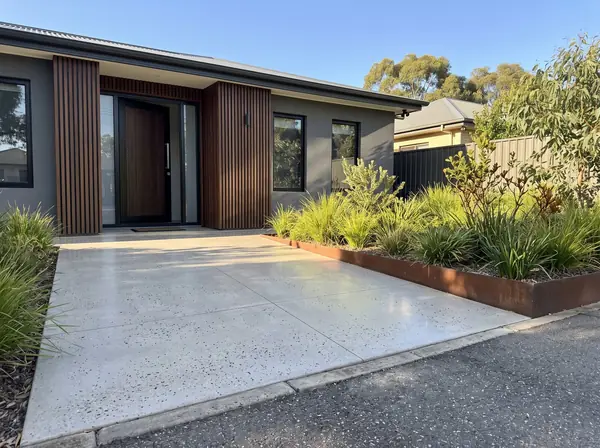
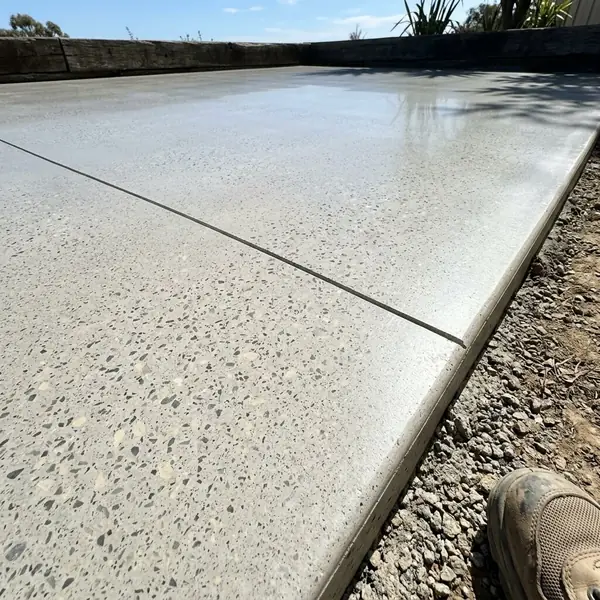
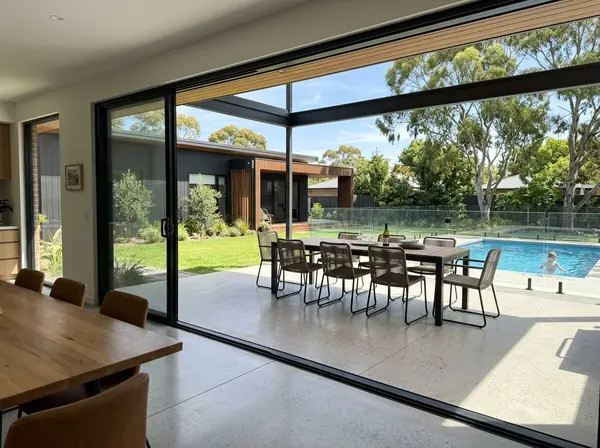
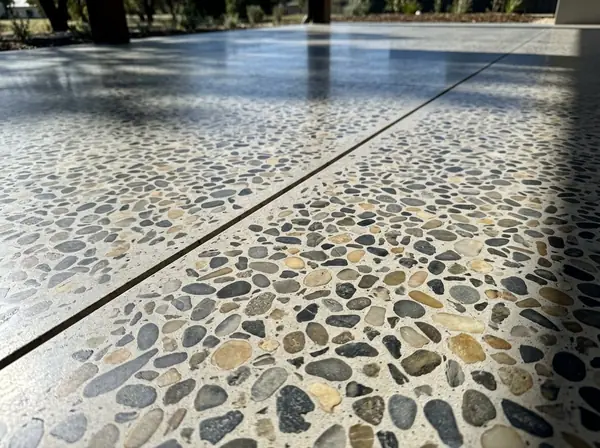
Honed concrete entry, Norwood. Inset: the surface up close.
Why honed concrete
The finish that makes the house look finished
Honed concrete does what tiles and pavers try to do, in one seamless pour that never lifts, weeds or rocks.
Smooth and seamless
One flat plane from the front door to the drive, with only fine saw-cut joints. No grout, no gaps, no edges to catch a toe.
Cooler and cleaner
Pale bases stay cooler than dark stone, and a sealed honed surface sweeps and hoses clean in minutes.
Shows the stone
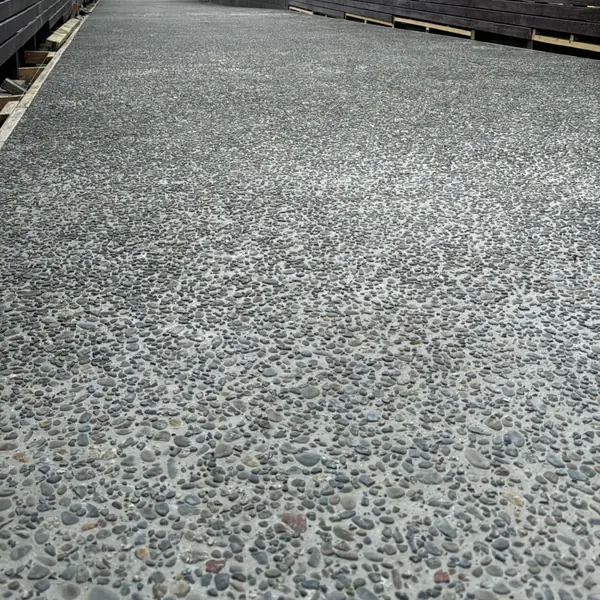
Grinding reveals the stone in the mix as a fine terrazzo fleck. Choose how much shows, from a light speckle to full exposure.
Made for modern facades
Render, black steel, timber battens and glass all sit better on honed than on anything busier. It's the finish architects specify.
Recent jobs
Honed concrete, poured and ground across Adelaide
Entries, courtyards, alfrescos and pool decks we've honed lately. Use the arrows to flick through, or tap the middle card to see it up close.
What you get
One quote, from pour to polish.
Honing is a two-visit job, and the quote covers both. No allowances, no surprise invoice for the grinding. It includes:
- A free on-site measure and quote, with a written scope.
- Sealed samples of each exposure grade and base colour, brought to you.
- Removal of the old surface, excavation, compacted base and formwork set to fall.
- SL72 mesh and a 32 MPa mix batched for honing, poured and floated flat.
- Diamond grinding to your chosen exposure, grout, then two coats of sealer.
- Saw-cut joints, site cleaned, and a workmanship guarantee.
Fully licensed and covered by public liability insurance. Certificates come through with your quote.
Book a free measure and quote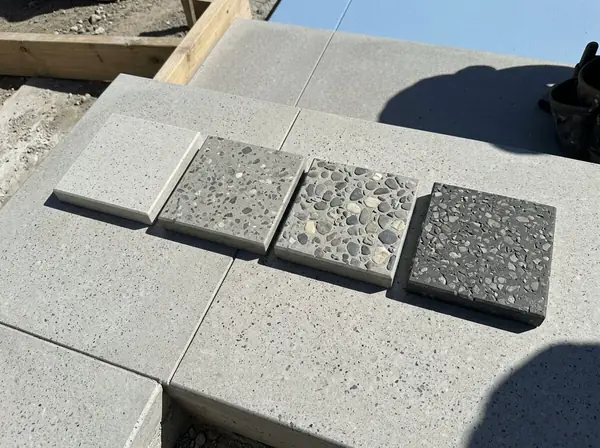
Verified Google review
“We wanted the alfresco to run straight out from the living room floor and it does. They ground it dead flat, the fleck matches the samples exactly, and a hose and a broom is all it's needed in a year of kids and dogs.”
The job explained
What is honed concrete?
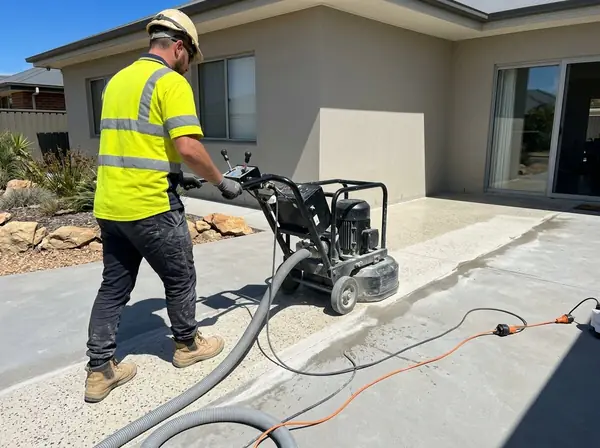
Honed concrete starts as a normal pour. Once the slab has cured for a week or so, we come back with a planetary grinder and diamond pads and take the top few millimetres off. That cuts through the cement skin to the stone in the mix, and leaves a flat, matte surface with a fine fleck of cut stone in it. It is then grouted, sealed and finished to the sheen you chose.
The look sits between a plain slab and polished terrazzo. How much stone shows is up to you: a light grind gives a salt-and-pepper speckle, a medium grind shows small cut stones, and a full grind exposes the aggregate across the whole face. Outdoors it is honed, not polished: a mechanically polished floor is a different process for inside the house.
Where it doesn't suit
A honed surface is smoother than exposed aggregate, so on a steep driveway or around a pool we specify a non-slip sealer, and on a very steep slope exposed aggregate is the safer choice. Heavy vehicles are fine on the right thickness. We'll tell you straight when honed isn't the right pick.
At a glance
- Slab thickness
- 100 mm125 mm for driveways with heavy vehicles
- Concrete strength
- 32 MPaa denser mix grinds cleaner
- Grind depth
- 1 to 6 mmlight, medium or full exposure
- Cure before grinding
- 7 to 10 dayslonger in cold weather
- Walk on it
- 24 hrsafter sealing
- Park on it
- 7 daysafter the pour
- Reseal
- 2 to 3 yearssooner in full sun
- Sheen
- Matte to satinset by the sealer, not the grind
How we do it
Two visits: pour it, then grind it
Honed concrete is poured like any slab and then finished a week later. The grinding is where the look comes from, and it can't be rushed.
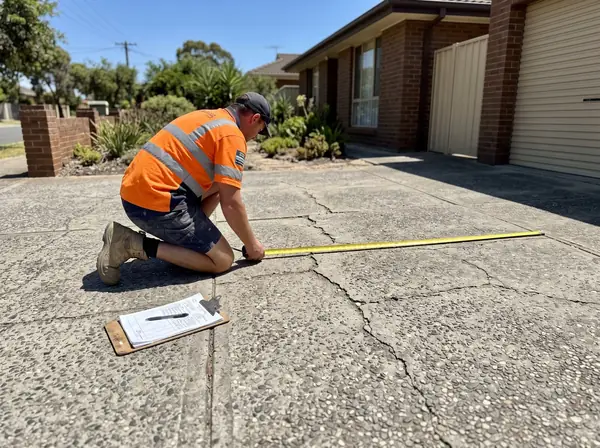
Measure and quote
We measure up, check falls and access for the grinder, and send a written quote and scope within a day or two.
Choose grade and colour
Sealed samples of light, medium and full exposure in each base colour, so you can see the fleck and the sheen for real.
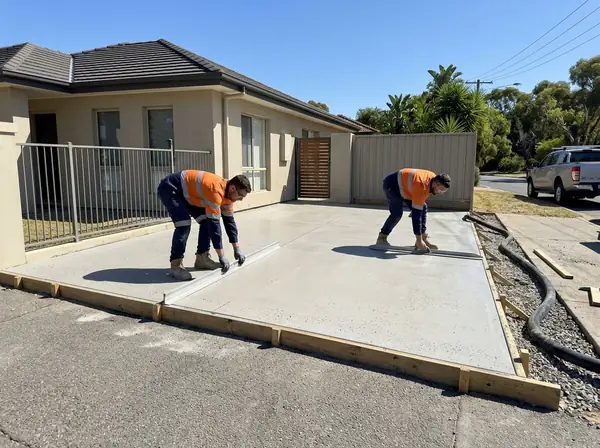
Prep and pour
Base, formwork and mesh as for any slab, then a 32 MPa mix poured and floated dead flat. A flat pour means an even grind.
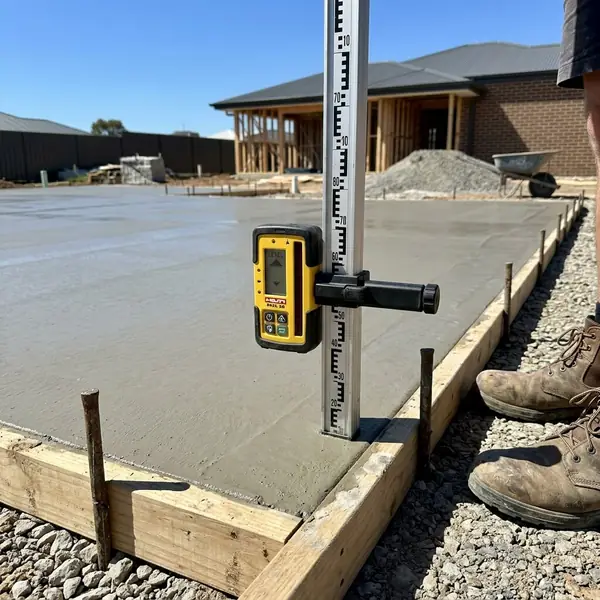
Cure
The slab hardens enough to grind without pulling stones. We saw-cut the joints during this week.
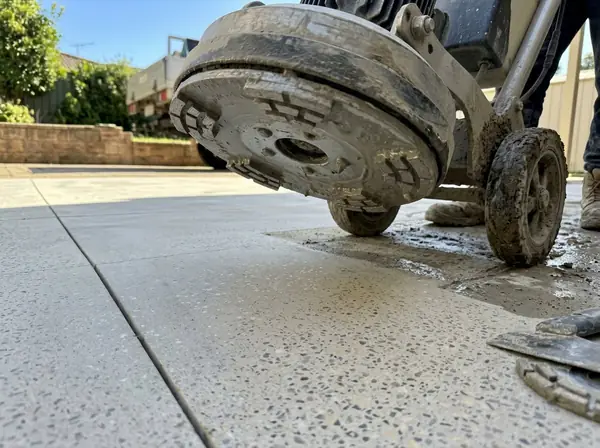
Grind and hone
Three passes of progressively finer diamond pads take the surface to your chosen exposure, then it's grouted and cleaned.
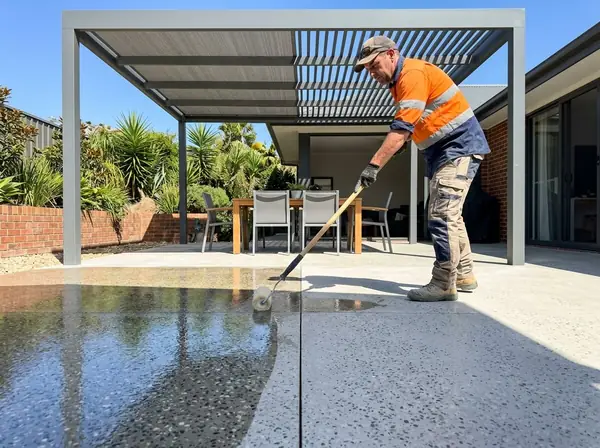
Seal and hand over
Two coats of sealer, matte or satin, with a non-slip additive where it's needed. Walk on it the next day.
Grade and colour
How much stone do you want to see?
Two decisions set the look: how deep we grind, and the colour of the base the stone sits in. These are the combinations we do most.
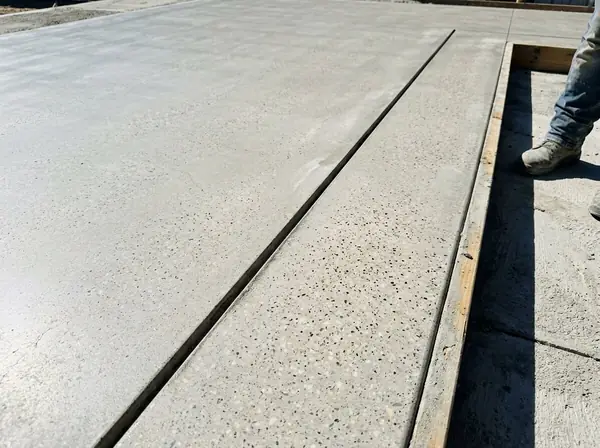
Light exposure
A salt-and-pepper speckle with only the tips of the stone showing. The quietest look, and the most forgiving of an uneven pour.
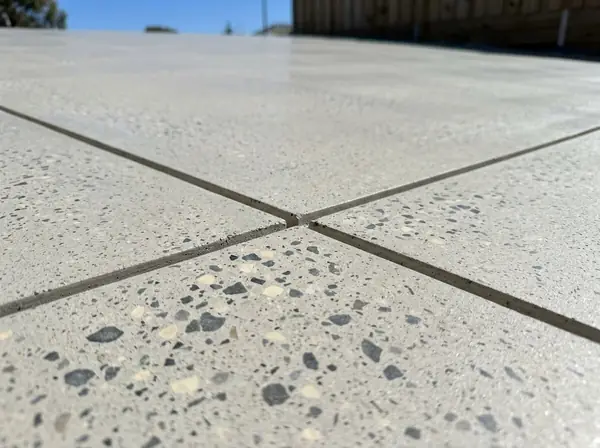
Medium exposure
Small cut stones evenly across the face. The standard grade, and the one most people choose from the samples.
Full exposure
Ground deep enough to show the aggregate across the whole surface. Closest to terrazzo, and the richest colour.
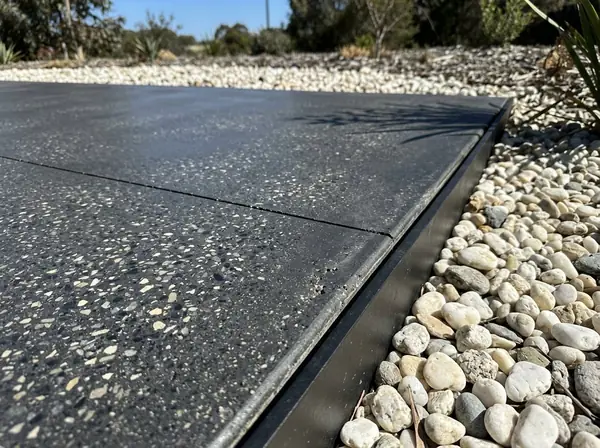
Charcoal base
A dark oxide base with grey stone fleck. Dramatic against pale render and black steel, and hides marks well.
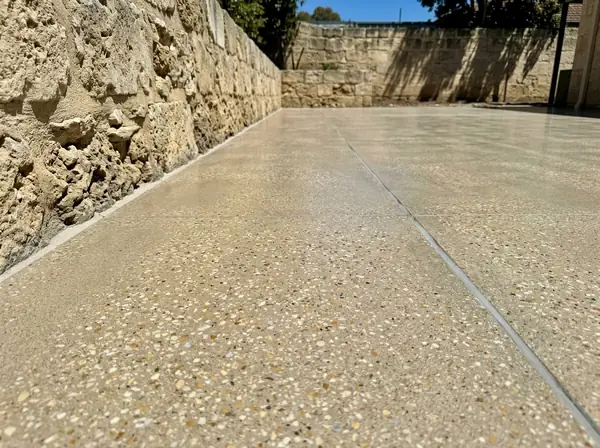
Cream base
A warm sandy base with honey and white fleck. Suits limestone, timber and Hamptons-style homes, and stays cool.
Natural grey base
Plain cement grey with mixed grey stone. The most economical base, and it goes with anything.
The grind depth changes the colour too: the deeper we go, the more the stone sets the tone. That's why the samples are ground and sealed, not painted.
Where it works
Where honed concrete works best
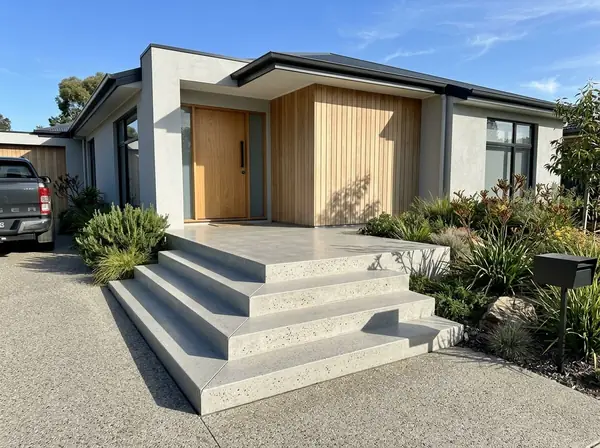
Entries and porches
The first thing a visitor stands on. Seamless from the drive to the door.
Alfresco and patios
Run the same finish inside and out for one continuous floor.
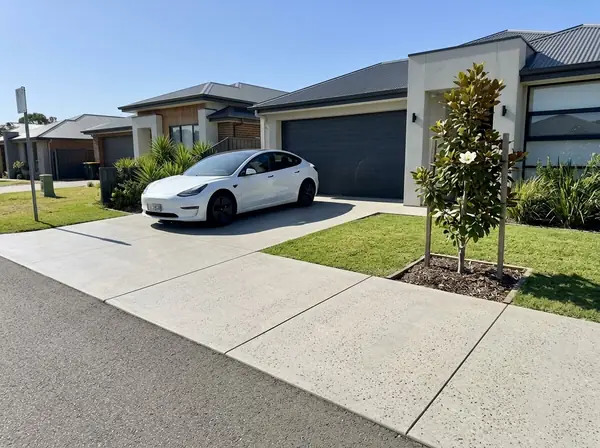
Flat driveways
A 125 mm slab, a non-slip sealer, and a driveway that matches the entry.
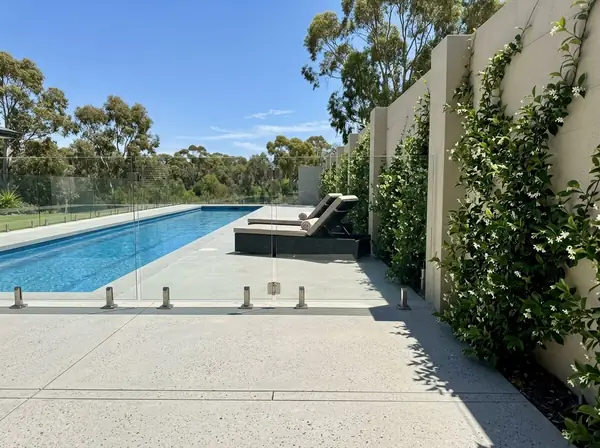
Pool decks
Pale, cool and smooth, with a non-slip sealer so it's safe wet.
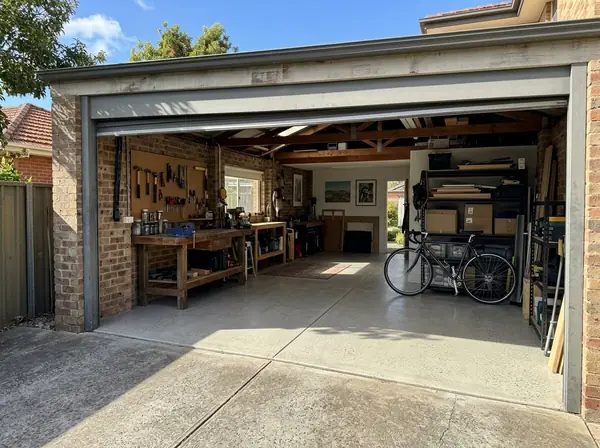
Garages and studios
Sweeps clean, takes a car, and looks like a finished floor.
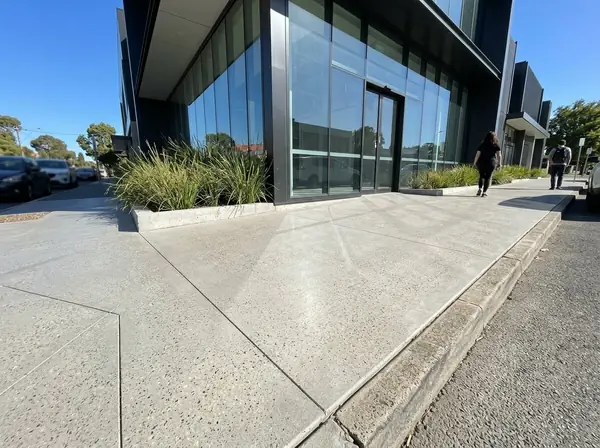
Showrooms and forecourts
Commercial frontages that need a premium look and daily traffic.
How it compares
Honed vs polished, exposed aggregate and tiles
How the smooth finishes stack up outdoors. For the long version, read Exposed Aggregate vs Honed Concrete: Which Suits Your Adelaide Home?.
| Feature | Honed concrete | Polished concrete | Exposed aggregate | Large-format tiles |
|---|---|---|---|---|
| Look | Flat, matte to satin, fine stone fleck | Glossy, mirror-like, indoors only | Natural stone texture | Modular, grout lines |
| Where | Outdoors and in | Indoors | Outdoors | Outdoors and in |
| Grip when wet | Good with a non-slip sealer | Poor when wet | Excellent | Varies by tile |
| Joints and edges | Fine saw cuts only | Fine saw cuts only | Fine saw cuts only | Grout every 600 mm |
| Maintenance | Reseal every 2 to 3 years | Burnish and reseal | Reseal every 3 to 5 years | Regrout, drummy tiles |
| Heat underfoot | Depends on the base colour | Depends on the base colour | Depends on the colour | Depends on the tile |
| Best for | Entries, alfresco, pool decks | Living areas | Driveways, paths, pools | Patios and wet areas |
Built for Adelaide
Honed concrete that copes with Adelaide's sun, leaves and clay
Adelaide summers are hard on a dark honed slab underfoot and on the sealer. We steer barefoot areas to a cream or natural grey base, and reseal timing follows how much sun the slab gets.
Gum leaves stain a pale honed surface if they sit wet for weeks. A penetrating sealer with a topical coat over it keeps tannin out, and a hose and broom lifts what does land.
The reactive clay under the eastern and northern suburbs moves with the seasons. A honed slab shows a crack more than a textured one, so the base, mesh and joint spacing get extra care before we pour.
FAQ
Honed Concrete questions, answered
What is honed concrete?
Honed concrete is a normal concrete slab that is ground back with diamond pads after it has cured, then sealed. Grinding cuts through the cement skin to the stone in the mix, leaving a smooth, flat, low-sheen surface with a fine terrazzo-like fleck.
What is the difference between honed and polished concrete?
Honed concrete is ground to a matte or satin finish and sealed, and it is what we use outdoors. Polished concrete is taken further with finer pads and a densifier until it has a glossy, reflective surface, which is an indoor floor: outside it is slippery when wet and the gloss weathers.
Is honed concrete slippery when wet?
Smoother than exposed aggregate, so we plan for it. Flat entries and alfrescos are fine with a matte sealer. Driveways, steps and pool decks get a sealer with a non-slip additive, which gives grip without changing the look.
Can you hone my existing concrete?
Often, yes. A slab that is sound, thick enough and free of major cracks can be ground in place, which is quicker and far less disruptive than replacing it. We do a small test grind first so you can see what the stone underneath looks like before committing.
Does honed concrete stain?
Sealed properly, no more than any outdoor surface. The sealer keeps oil, tannin and rust out of the pores. Wipe up spills when you see them, hose it regularly, and reseal every two to three years.
How long does honed concrete take?
About two weeks end to end. The pour is a day or two, then the slab cures for seven to ten days before it can be ground without pulling stones out, then a day or two to grind, grout and seal.
Does honed concrete get hot?
Like any outdoor surface, the darker it is the hotter it gets in an Adelaide summer. A cream or natural grey base stays much cooler than a charcoal one, so for a pool deck or a barefoot alfresco we'll steer you to the paler samples.
Will it crack?
All concrete moves. We control where it happens with the right thickness, mesh and saw-cut joints at tight spacing, so movement shows up as a straight, fine joint rather than a random crack. A honed surface shows a crack more than a textured one, which is why we don't cut corners underneath.
How much stone will show?
That is your call. A light grind gives a salt-and-pepper speckle, a medium grind shows small cut stones evenly, and a full grind exposes the aggregate right across the face. The sealed samples we bring show each grade in each base colour.
Honed or exposed aggregate, which should I choose?
Honed is smoother, flatter and more contemporary, so it wins for entries, alfrescos and modern facades. Exposed aggregate grips better and hides marks better, so it wins for sloping driveways, paths and pool surrounds. We do both and bring samples of each.
Related reading
Before you decide
Exposed Aggregate vs Honed Concrete: Which Suits Your Adelaide Home?
Two finishes, two very different jobs. How they're made, how they handle heat and wet feet, and which one we'd pick for your driveway.
Read more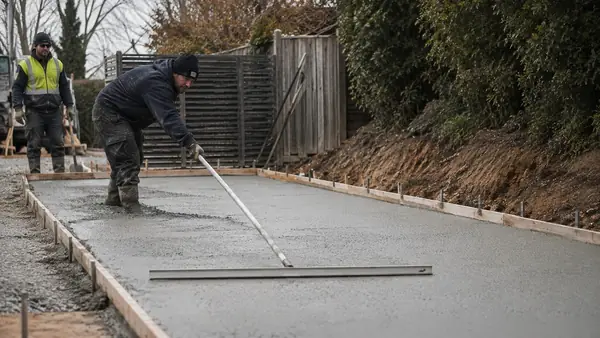
Why Concrete Cracks on Adelaide's Clay Soils, and How We Prevent It
Reactive clay moves with the seasons. Base prep, slab thickness, mesh and saw-cut control joints are what decide whether that movement shows.
Read moreOther finishes and services
Exposed Aggregate
Washed back to reveal the stone. Grippy and hides marks.
Concrete Driveways
Old drive out, new drive poured, cut and sealed.
Concrete Slabs
Shed, garage, granny flat and house slabs.
Paths & Walkways
Side paths, footpaths and entry walkways.
Pool Surrounds
Non-slip finishes for pools and alfresco areas.
Ready when you are
Ready for a floor that runs from the front door to the street?
Tell us about the job and we'll come out, measure up and bring the ground and sealed samples. A written quote, usually within a couple of days. No pressure and no obligation.